THE CHURCH OF ‘THE HOLY HAND‘
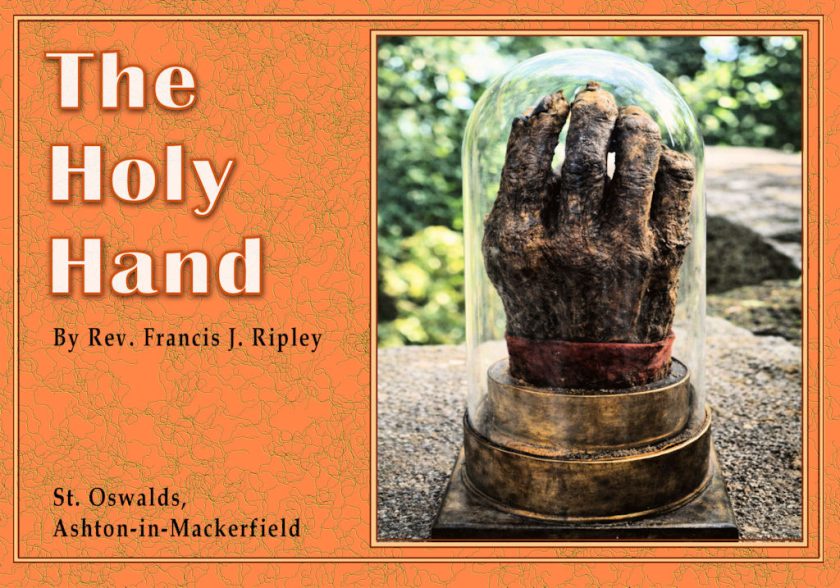
“The church of the Holy Hand” – that is how the Catholics of south-west Lancashire refer to the Catholic Church at Ashton-in-Makerfield. The ‘Holy Hand’ belonged to Edmund Arrowsmith, one of the Forty Martyrs canonized by Pope Paul VI on October 25th, 1970.
Childhood Studies and Ordination Jesuit Betrayal Trial Prison Last Words Aftermath Apparition The Hand Evidence of Veneration Favours through the Martyr’s Intercession Linen 1970 The Church Prayers Historical Lesson Parish Priests of St. Oswald’s
Childhood
Brian Arrowsmith was born at Haydock, about a mile from Ashton, in 1585, that is 18 years before Queen Elizabeth I died. Robert, his father, was a farmer who knew what it was to suffer for the Catholic Faith, for Thurstan Arrowsmith, his father, had had his goods confiscated, been imprisoned and died in Salford gaol, a confessor for Christ. Margery, Brian’s mother, was a daughter of Nicholas Gerard. She, too, knew what persecution meant. Her father was carried by force to the Protestant church, but instead of joining in with the prayers, he sung Psalms in Latin with such a loud voice that the minister could not be heard and begged somebody to remove the cause of the trouble.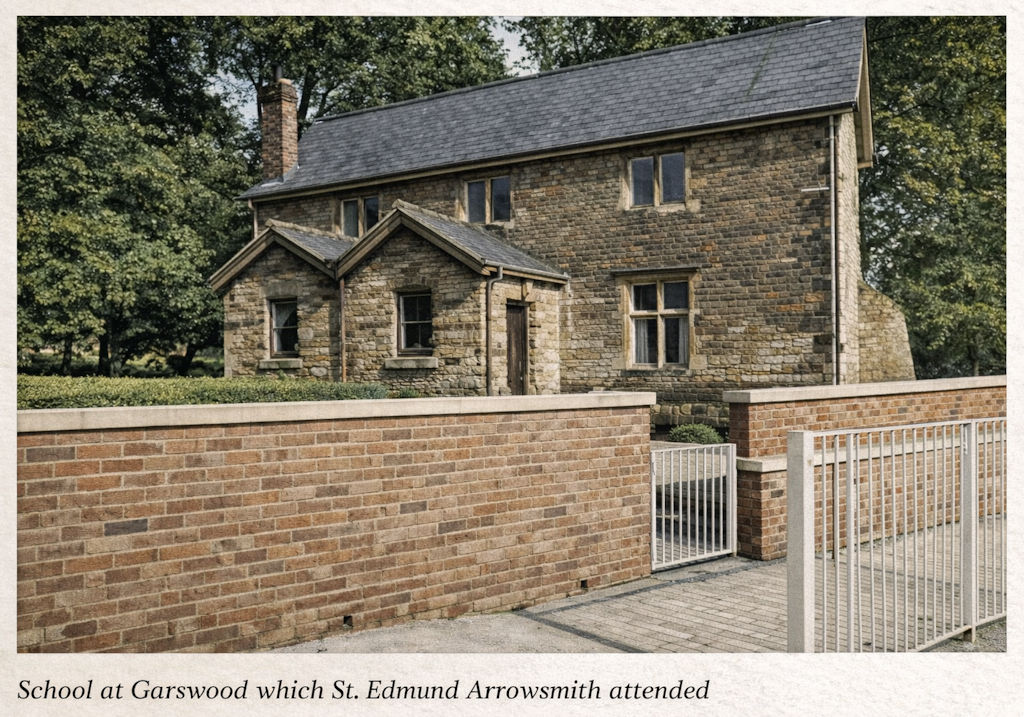
We know that at least once young Brian’s home was raided by the pursuivants, as the home-wrecking priest-hunters were called. They turned everyone out of bed, tried every bed and hole with their swords, searching for priests or evidence of them. Then they tied the family two and two together, took the parents off to Lancaster jail and left the four little children shivering in their night clothes. Mr. Arrowsmith had to pay a fine to be released. Brian was eight at the time.
In order to get away from continuous persecution Robert Arrowsmith went with his brother Peter to Holland and Belgium. They became soldiers for a time and Peter died of his wounds. Robert visited another brother, the learned and pious Dr. Edmund Arrowsmith at the English College, Douai, which was about twenty miles from Lille. He soon returned home to Haydock but after a little while gave his heroic soul to God as he had foretold some time before.
The widowed Mrs. Arrowsmith was helped by a priest to care for her children. Brian learned Our Lady’s office and used to recite it with his companions on his way to and from school. The little school still stands near Garswood railway station. When he came home in the evening young Brian used to go at once to the oratory in his home to recite the Jesus Psalter, the seven penitential Psalms and other devotions. Everybody liked him, even his Protestant schoolmaster.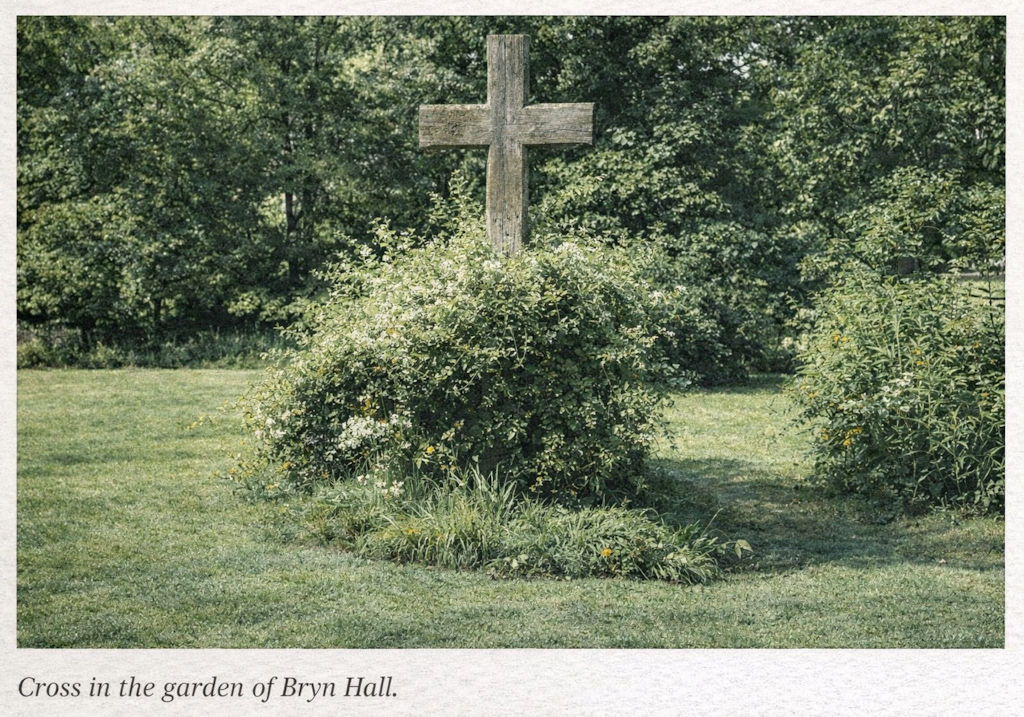
Studies and Ordination
In 1605, when he was 20, Brian managed to find a ship to the continent. He had previously made several attempts to go to Spanish seminaries but had failed. In December he was admitted to the English College, Douay. He took the oath, affirming that he would work as a missionary priest in England. He was confirmed and took the name Edmund, by which we know him, after his uncle.
His health was not too robust so his superiors decided to present him for Orders a little before the normal time. On June 14th, 1612, he received the minor Orders at St. Nicholas’s church, Douay. The major Orders followed at Arras where he was ordained priest on December 9th 1612. On June 17th 1613 he was sent to work in the English mission.
What was he like? “Of mean presence” say contemporary records, but “of great innocency of life, of great sincerity in his nature, of great sweetness in his conversation, and of great industry in his function”. “Zealous, witty and fervent” says another. A fellow priest wished that he would “carry salt in his pocket to season his actions, lest too much zeal without discretion might bring him too soon into danger, considering the vehement and sudden storm of persecution that often assailed us”. Once a Protestant gentleman, deceived by Edmund’s appearance, tried to make a fool of him. Edmund retorted so vigorously that the man swore and said: “I thought I had met a silly fellow but now I see that he is either a foolish scholar or a learned fool”.
Jesuit
For ten years Fr. Edmund worked in Lancashire. Among his colleagues were several Jesuits. Edmund admired them so much that he asked to join the Society. For a couple of months he went to Essex and after a retreat was admitted into the Order, being allocated to the “College of St. Aloysius”. At this time the 130 Jesuits in England were organized into districts called “Colleges”, each under a Rector. The twenty priests working in Lancashire formed the College of St. Aloysius. Their central house was the Blue Anchor Inn later known as the Boars Head at Brindle.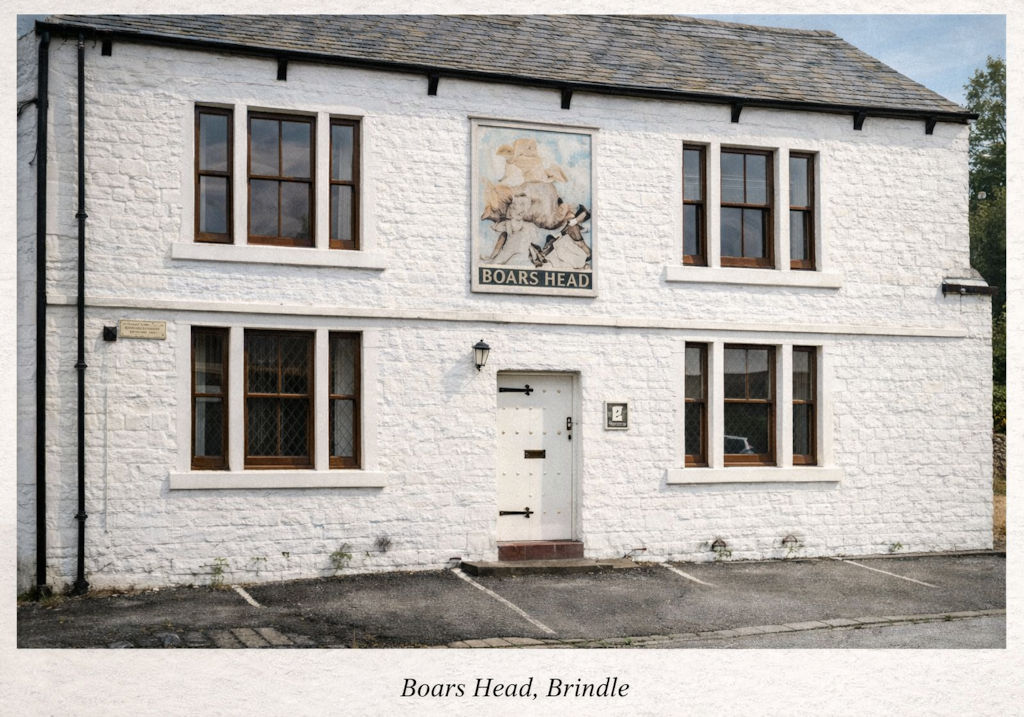
Some idea of the heroism of priests and faithful layfolk in those days can be gathered from the fact that when the priests met they devised a special code for communicating with each other. The district or college was called the Factory. The local superior was the Master. Priests were Factors. The Pope was Mr. Abraham. Another device was for priests to change their names from time to time. Fr. Edmund was now Mr. Bradshaw or again Mr. Rigby.
We read that in a discussion with Dr. Bridgeman, the Bishop of Chester, the priest’s arguments for the truth of the Catholic religion and the authority of the Pope were so convincing that the Bishop was silenced. Edmund had been arrested and brought before the Bishop, but the King, who was arranging a Spanish marriage, ordered that many priests and Catholics should be released. This was probably in 1622.
Betrayal
Six years later he was betrayed. A young man called Holden, son of the landlord of the Blue Anchor, had attempted marriage before a Protestant minister with his first cousin. Fr. Arrowsmith told him that he ought not to live with her until the marriage had been rectified. This enraged young Holden who betrayed him to the nearest Justice of the Peace. This man, not wishing to arrest the priest, sent word to the young man’s father that the priest-hunters were on their way. Warned, Fr. Edmund snatched up some books, put on his great coat, mounted his horse and galloped away towards Preston.
He turned off down a country lane and crossed Brindle Moss, a large field. At a ditch the horse shied and refused to jump. Dragging the animal after him Fr. Edmund ran along the bank looking for a narrower crossing. His pursuers caught up with him. One slashed at him with his sword. With his stick he parried the blow but the stick broke and he was overpowered. The other pursuivants arrived and marched Fr. Edmund off to the Boar’s Head inn, which can still be seen. They locked him in the cowshed, went to the bar and spent all his money on drink – the equivalent of at least £9 in to-day’s money. Then they marched him off to Lancaster Castle.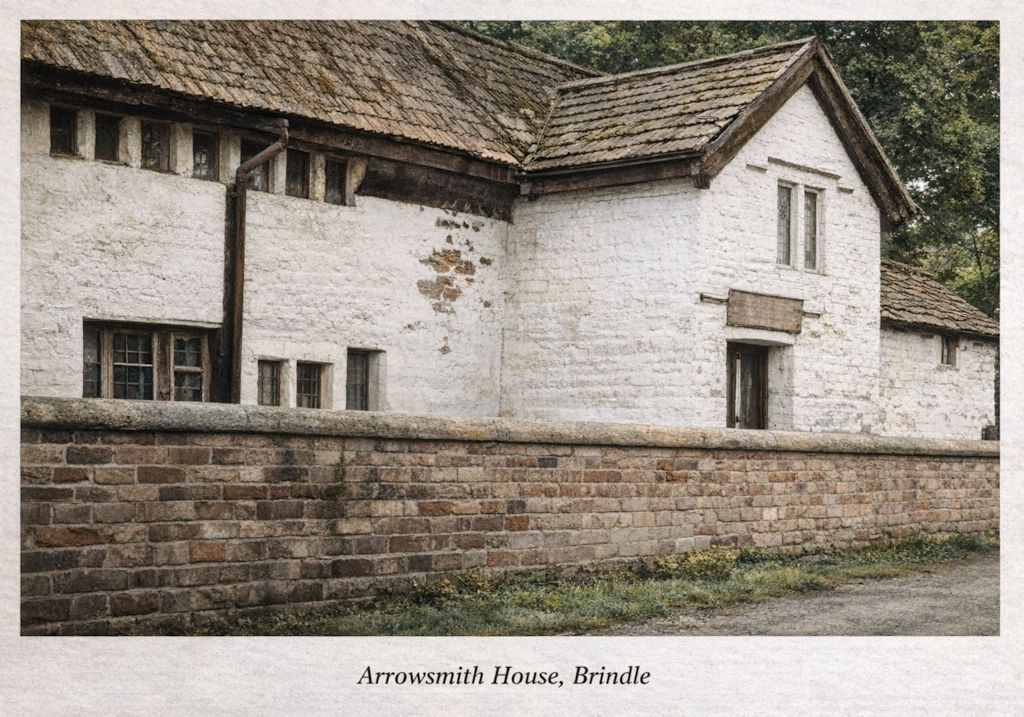
Trial
The story of his trial is well known. The Judge was a notorious anti-Catholic, a man who had himself left the Church, Henry Yelverton. On August 26th, 1628, this monster summoned the priest to the Bar where he stood among felons. The Judge sent for a colleague, Sir James Whitlock, to help him. “Sir, are you a priest?” the Judge asked. Making the Sign of the Cross Fr. Arrowsmith answered, “I would to God I were worthy”. “Yes”, Yelverton cried, “though he is not, yet he desires to be a traitor; this fact makes him guilty. Are you no priest?” Edmund was silent. To the jury Yelverton said, “You may easily see he is a priest”.
One of the magistrates, a parson called Lee, told the Judge, “He is a seducer who will convert half Lancashire to papistry if order is not taken”.
Father Arrowsmith asked permission to hold a disputation with Lee. When the Judge refused he said, “I will not only defend my faith with my words but would gladly seal it with my blood”. The Judge cried out violently in his anger, “You shall die”. “And you too, my Lord, must die” the prisoner answered quietly.
The end came quickly. The Judge ordered the jailer to put this prisoner in a dark place with neither light nor company. “I have not got such a place”, the jailer said. “Then put him in the worst place you have”, insisted Yelverton.
Fr. Arrowsmith heard the familiar sentence. “You shall go from hence to the place from whence you came; from thence you shall go down to the place of execution on a hurdle. You shall there be hanged by the neck till you be half dead; your members shall be cut off before your eyes and thrown into the fire, where likewise your bowels shall be burnt. Your head shall be cut off and set upon a pole, and your quarters shall be set upon the four corners of the Castle. And may God have mercy on your soul”.
So calm and prayerful was the prisoner before him that the enraged Judge added some extra words to the usual formula: “Know shortly that thou shalt die aloft between heaven and earth, as unworthy of either: and may thy soul go to hell with thy followers”. He paused. Then, seeing that the prisoner was still unperturbed, he shouted in fury: “I would that all priests in England might endure the same sentence”. “Deo gratias; God be thanked”, said the martyr.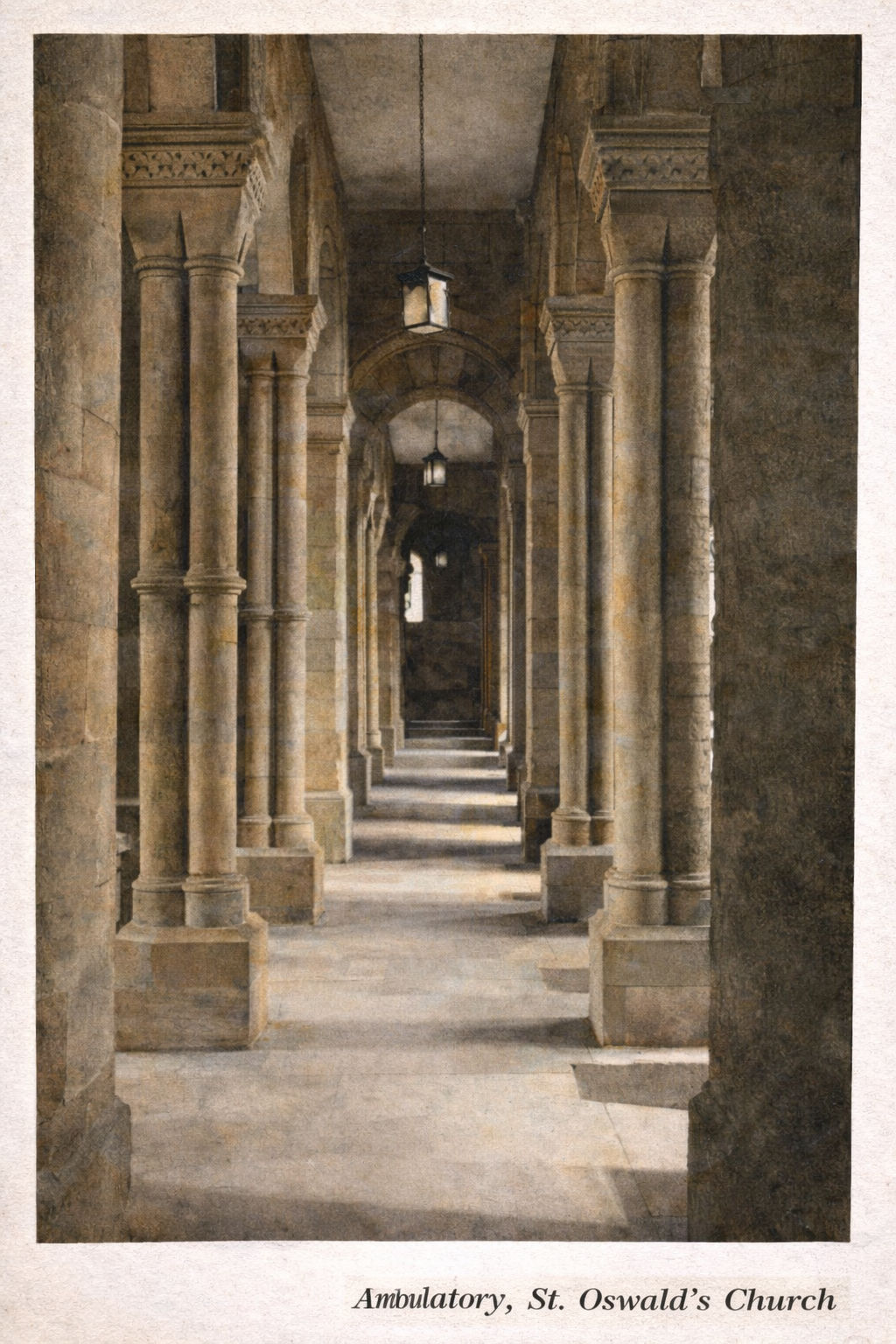
Prison
After he had been loaded with the heaviest irons that could be found he recited aloud the 50th Psalm, the Miserere. Even the prisoners in the Castle were stunned by the Judge’s cruelty. As for the people of the town, nobody would act as executioner for fear of public opinion. A butcher agreed to help but was afraid of doing the deed himself. He offered his servant £5 to stand in for him. But that servant escaped and was never seen by his employer again. In the end a deserter, himself under sentence of death, offered to perform the legal murder for forty shillings, the victim’s clothes and his liberty. Even then the good folk of Lancaster would not lend an axe to butcher God’s servant.
On August 28th they told Edmund Arrowsmith that he was to die that day. “I beseech my Redeemer to make me worthy of it”, he said. The Judge did not wish the people to be edified by what he knew would be a holy death, so he ordered the execution to take place at dinner time hoping that most people would then be in their homes. In spite of this vast numbers came to see the end.
An interesting detail comes from a contemporary source, but its authenticity is questionable. It is that as the martyr was being carried through the Castle yard St. John Southworth, who had also been condemned for his priesthood but was enjoying a reprieve, showed himself at a window. When Father Arrowsmith saw him he raised his hand to beg absolution. St. John absolved him in the presence of all the people. A Catholic gentleman clasped the martyr in his arms and kissed him tenderly until the sheriff ordered him to be removed by force.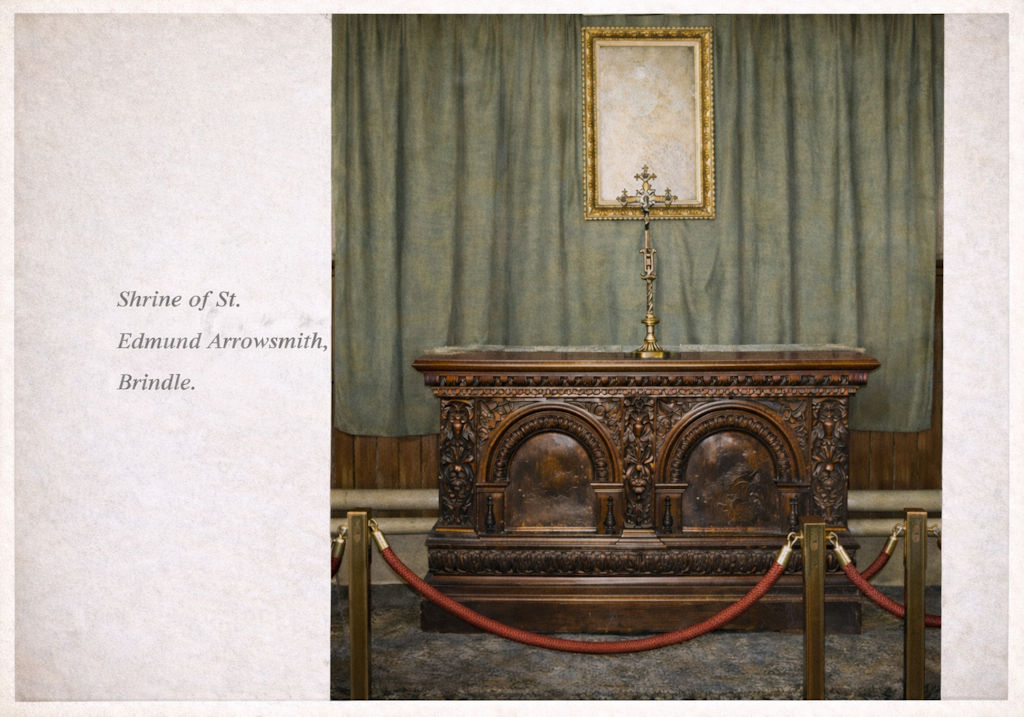
Last Words
Bound to the hurdle, his head to the horse’s tail, he was dragged to the gallows. In his hand he held two pieces of paper in which were written down, under the title Two Keys of Heaven, an act of the love of God and an act of contrition. Arrived at the place of execution the parson, Lee, pointed to the cauldron and said, “Look you, Master Rigby, what is provided for your death. Will you conform and lay hold of the King’s mercy?” With a smile the man of God replied: “Good sir, tempt me no more. The mercy which I look for is in heaven through the death and passion of my Saviour, Jesus Christ; and I humbly beg Him to make me worthy of this death”. At the foot of the gallows he prayed again: “I freely and willingly offer to Thee, sweetest Jesus, this my death in satisfaction for my sins, and I wish that this little blood of mine may be a sacrifice for them”.
After an interruption he went on: “O Jesus, my life and my glory, I cheerfully restore the life, which I have received from Thee, and, was it not thy gift, would not be mine to return . . . . . I die for the love of Thee; for our holy Faith; for the support of the authority of thy Vicar on earth, the successor of St. Peter, true head of the Catholic Church, which Thou hast founded and established. . . ” His prayer continued with acts of sorrow for his sins.
Going higher up the ladder he proclaimed: “Bear witness, gentlemen, who are come to see my end, that I die a constant Roman Catholic; and for Jesus Christ his sake, let not my death be a hindrance to your well doing, and going forward in the Catholic religion, but rather may it encourage you thereto. For Jesus sake, have a care of your souls, than which nothing is more precious; and become members of the true Church. . . . Nothing grieves me so much, as this England, which I pray God soon to convert”.
Lee had not finished yet. Once again he begged the martyr to accept the King’s mercy and his life. All he had to do was conform to the Protestant religion. “O sir, how far am I from that!” the Saint replied; “Tempt me no more. I am a dying man. I will do it in no case, on no condition. The day will come when far from repenting your return to the Catholic Church, you will find it your greatest comfort and advantage”. It was the end. With the words, Bone Jesu, Good Jesus, on his lips Father Arrowsmith was thrown from the ladder. He was cut down, dismembered, bowelled and quartered. His head was set on a pole among the pinnacles of the castle and his quarters hung on the four corners of it.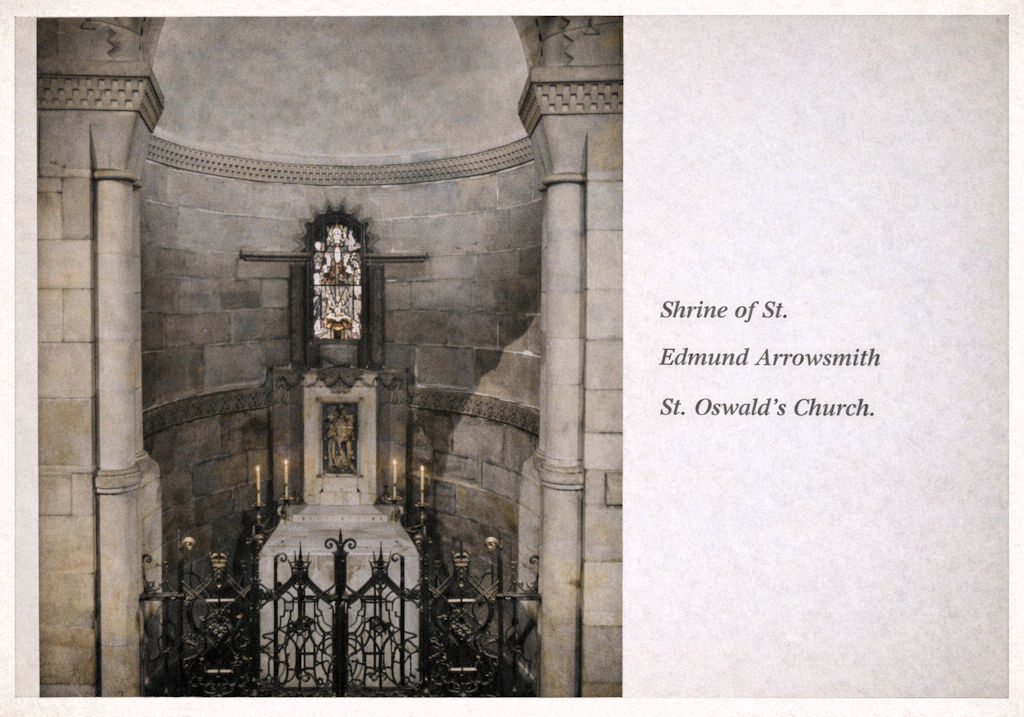
Aftermath
The judge watched the final scene through a spy-glass. Then he sat down to dinner. His true character can be judged from what happened next. Some venison was brought in to him as a present. Then they brought the quarters of Father Arrowsmith. The contemporary life records: “To glut himself with horror, he barbarously handled the quarters, laid them by the venison and was not ashamed inhumanly to compare them together”. Next day as he left the town he ordered the martyr’s head to be raised six yards upon the pinnacles of the castle.
A very different witness of the execution was the father of St. John Southworth. He declared that at the moment of the martyr’s death he saw a very brilliant light extending in a luminous stream from the prison to the gallows like resplendent glass; he had never in the course of his life witnessed anything like it.
In spite of the precautions taken relics of Father Arrowsmith were secured. One of the prison-keepers at the Castle wrote and signed a testimonial that the relics he had collected were those of Father Arrowsmith. The most celebrated of them all is the Saint’s hand which is now venerated in the church of St. Oswald, Ashton-in-Makerfield, locally known as “The Church of the Holy Hand”.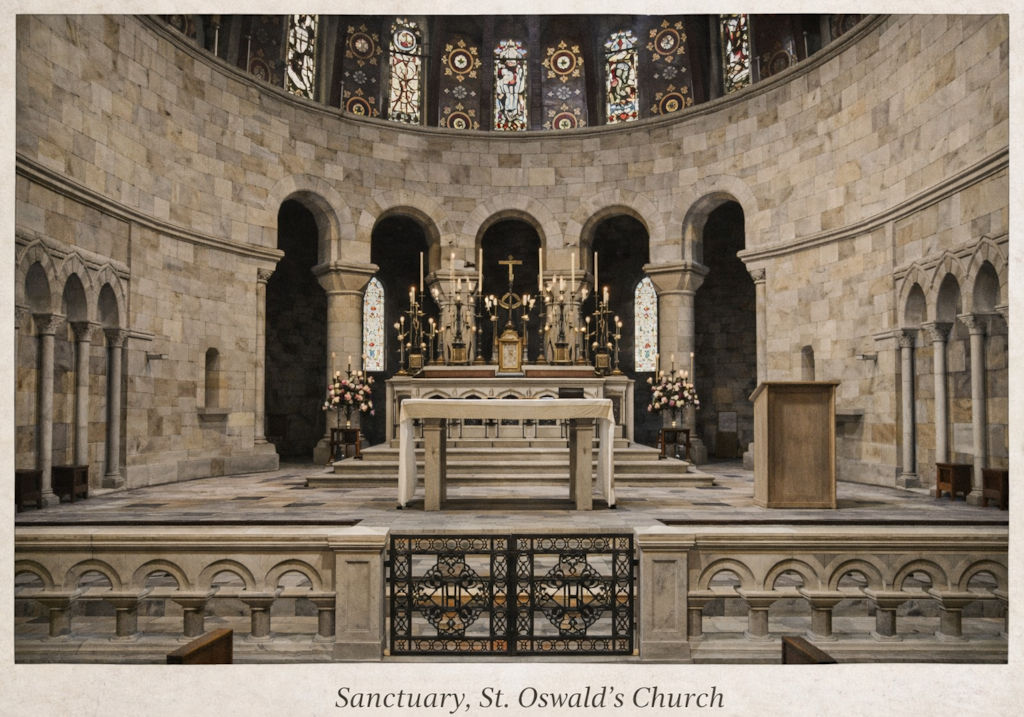
Aparition
About a dozen miles away along the East Lancashire Road is preserved the skull of St. Ambrose Barlow. It is in the care of the Bishop of Salford at his residence, Wardley Hall. St. Ambrose ministered to prisoners in Lancaster Castle, among them St. Edmund Arrowsmith and St. John Southworth, his friends with whom he had been working in Lancashire. Bishop Challoner writes: “Whilst he (Barlow) was in these dispositions God was pleased to send him a priest of the Society of Jesus to assist him; as he himself had twelve years before exercised the same charity to Father Arrowsmith in prison before his last conflict; at which time that confessor of Christ is said to have foretold that he should be the next to follow him”.
In an 18th century biography of St. Edmund, Fr. Cornelius Murphy relates another curious incident as follows: “How different was the death of Father Arrowsmith, who on the very day of his memorable combat appeared to the Reverend Father Ambrose Barlow, an English Benedictine monk, then at a great distance and ignorant of what had taken place at Lancaster; and related to him his happy conflict and triumph, foretelling at the same time that Father Ambrose would share in a like glorious end”. This apparition was described by St. Ambrose Barlow himself in a letter to his brother, Father Rudesind Barlow who was then at Douay, on May 17th 1641. In the same letter, written from prison, the Benedictine Martyr disclosed that St. Edmund Arrowsmith had warned him: “I have suffered, and now you will be to suffer; say little, for they will endeavour to take hold of your words”.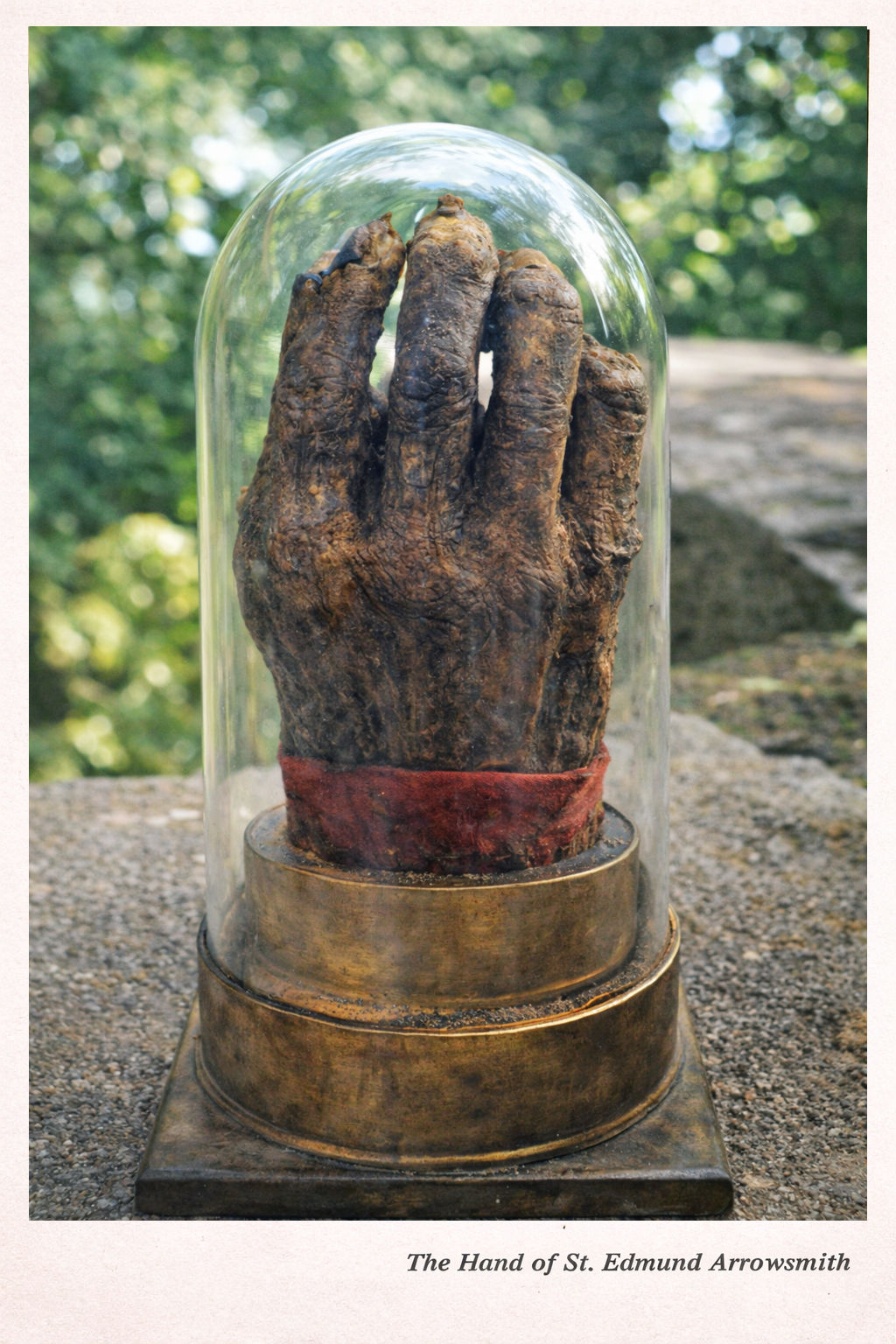
The Hand
The following is from a letter dated November 14th, 1932, written by the then parish priest of St. Oswald’s, Ashton-in-Makerfield, to the Archbishop of Liverpool:
Your Grace,
The undersigned, James O’Meara, Canon of the Metropolitan Chapter of Liverpool, parish priest of St. Oswald’s, Ashton-in-Makerfield, humbly petitions that Your Grace will be pleased to authenticate the relic of a hand, said to be that of the martyr, Blessed Edmund Arrowsmith, S.J. which is preserved at the aforesaid church of St. Oswald, and to allow it to be exposed for public veneration.
There is no existing documentary evidence of the authenticity of this relic, but it would seem that there is sufficient proof of its authenticity and identity from the antiquity of the veneration paid to this relic to permit Your Grace to give it your approbation. . . (Here follows a quotation in Latin from a commentary on Canon Law).
Blessed Edmund Arrowsmith, S.J. was put to death for the faith on 7th September 1628*. The hand was in the possession of the Gerard family of Bryn for many generations and was always considered to be that of the martyr, Father Arrowsmith. The Gerards were relatives of the martyr, his mother being Margery Gerard. Many years ago the relic was placed in the care of the priest at Ashton.
Foley in his ‘Records of the English Province, S.J.’ vol.2, p.61, gives in full the contents of a document, signed by 16 Catholics and 3 Protestants on the 27th November 1736, attesting to the cure of Thomas Hawarden by application of this relic on the 25th October 1736. In this document is contained the following sentence: ‘The sufferer continued in this low and languishing state until the 25th of October 1736 when his parents having often heard that many and great cures had been effected by means of the hand of Father Arrowsmith, which had been carefully preserved ever since, Mrs. Hawarden, believing that her child might receive benefit from the said hand, as others had done before, procured leave to have it brought.’ This evidence points to a veneration of the relic before 1736, testifies to the tradition that it is the hand of Father Arrowsmith and notes the existence of cures wrought by the hand previous to the one recorded in the document.
Another document quoted by Foley, ibid.p.64, gives the testimony of the miraculous cure of Mary Fletcher which took place on the 20th November 1768 by the application of this hand. It is dated the 15th February 1769 and is signed by many witnesses. At the end appears the following: I the undersigned do declare that the cure on the body of the above mentioned Mary Fletcher may safely be regarded as miraculous. Frances Petre. Sholey, May ye 8th 1769. This Francis Petre was the Vicar Apostolic of the Northern District of that period. By this act of attestation he officially recognises the miraculous nature of the cure of Mary Fletcher, and implicitly testifies to the tradition that the relic is one of Blessed Edmund Arrowsmith.
The veneration of the faithful has continued until the present day without interruption, and the hand is famous on account of the many cures worked through it”.
The official reply to this letter, giving permission for the hand to be exposed for public veneration is dated July 8th 1934.
*Challoner and most other authorities state that the martyrdom took place on August 28th.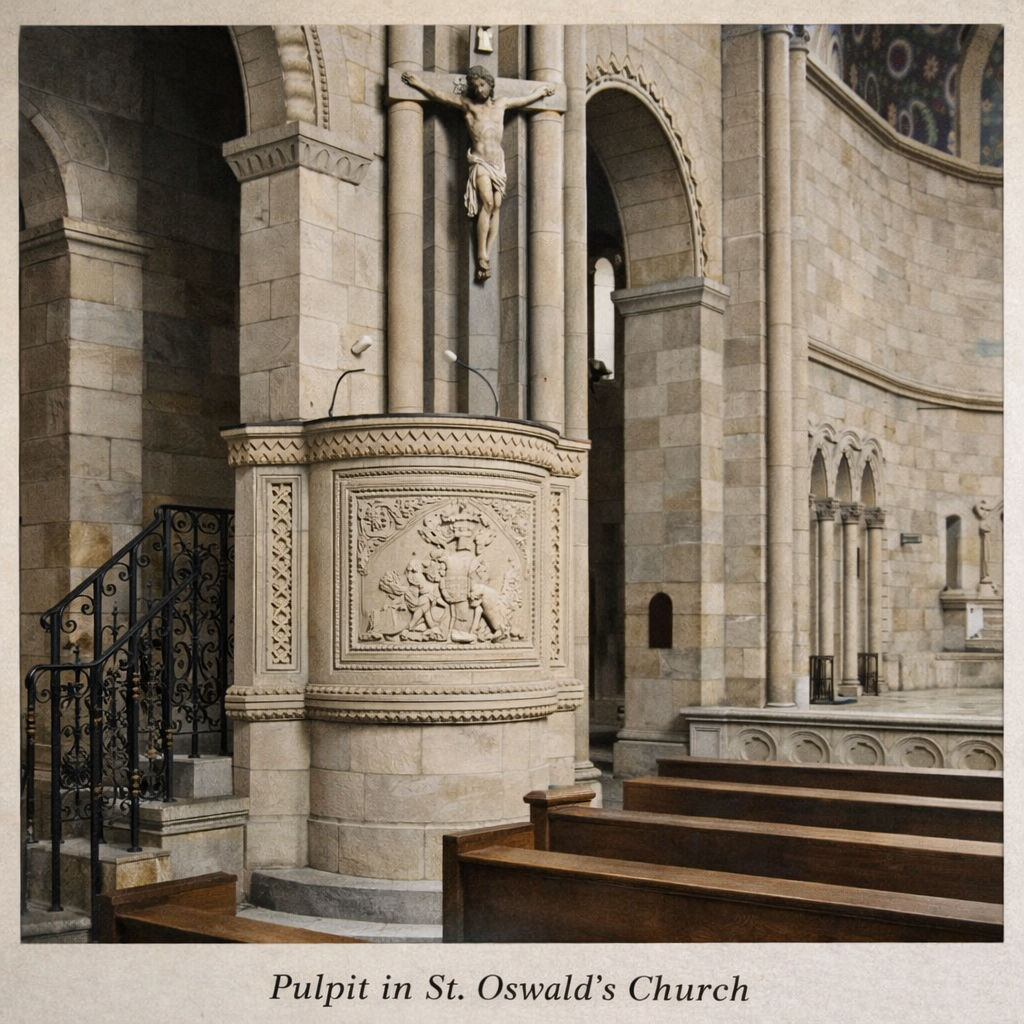
Evidence of Veneration
Some interesting information about the Holy Hand is found in the evidence given in the Ordinary Process for the beatification of Edmund Arrowsmith held at Westminster in 1874.
The Reverend Joseph Stevenson told how the fame of the miracles of Father Arrowsmith “is widely spread both in Ireland and in England. His hand which from time immemorial has been preserved by the Gerard family is universally called ‘the Holy Hand’. There is a continuous succession of miracles performed by it. Unfortunately a proper record has never been kept. The late Bishop of Southwark, Dr. Grant, said he had seen the last living witness of one of these miracles. A sick man had been brought along in a cart from a distance of many miles because he could not even move. The relic was shown to him by the priest’s housekeeper as the priest was absent, and it was then applied to the affected part: the invalid was cured there and then and walked home. Dr. Turner, the former Bishop of Salford, had a penitent who had been sent to hospital with a bad leg. When doctors pronounced it incurable he went to ‘see Father Arrowsmith’ and on his return he showed his leg to the Bishop who declared it to be completely cured. Fr. Stevenson continued: “I have heard of many recent as well as ancient miracles”.
Lady Georgiana Fullerton deposed as follows: “At Ashton-le-Willows is the hand of Father Arrowsmith. I have never heard the authenticity of this relic disputed nor its uninterrupted tradition, but I have repeatedly heard of the miracles wrought by its application and of the faith that both Catholics and Protestants have in its healing powers. ‘Going to the Holy Hand’ has become very common in the county of Lancashire. When a poor Irish woman recently fell ill as she was passing through Wigan and was taken to the Workhouse, a Committee of the Board of Guardians discussed the reason for her journey. As a result it became clear that the practice was very common and Protestant newspapers commented on it”.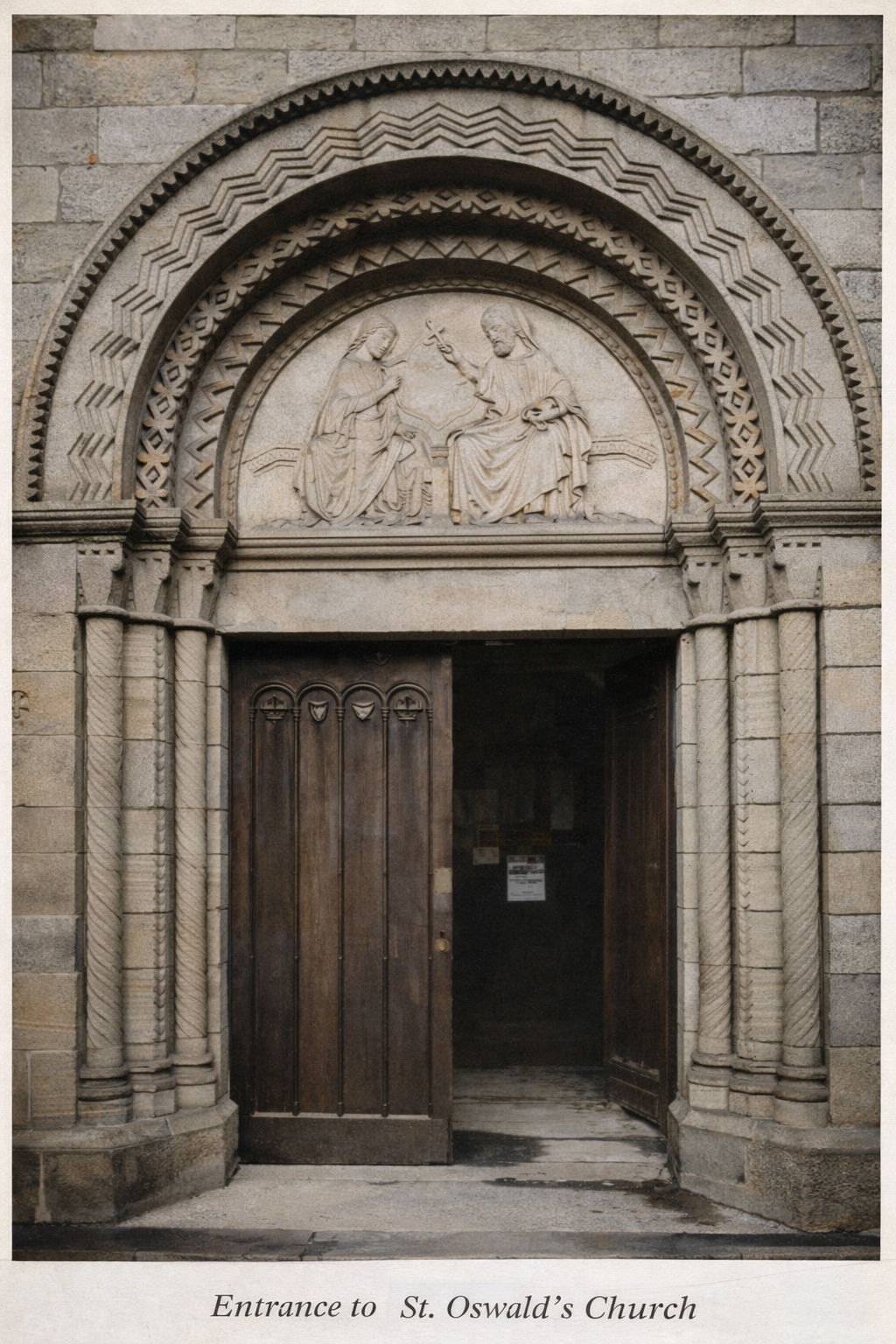
Favours through the Martyr’s Intercession
The following quotations from the evidence given before the Westminster tribunal use the word ‘miracle’. This must be understood in accordance with the context in which it appears. The present writer has no intention whatever of claiming that any of the incidents recorded in this evidence or later in this booklet are necessarily miracles in the technical sense. They are quoted because they provide evidence for the continuing power of St. Edmund’s intercession.
God exercises his Providence through the prayers of his Mother, the angels and the Saints. For this reason we are encouraged to pray to them. But a devotion to St. Edmund Arrowsmith, or to any other Saint, that is mainly self-centred or focussed principally on hope of receiving favours, is not fully according to the mind of the Church. What the Church really hopes for in canonizing our Martyrs is that the witness of their lives and deaths should make us want to love God and men like they did.
Brother Henry Foley, S.J., in his testimony recounted the evidence for the cures of Thomas Hawarden and Mary Fletcher as recorded in the archives of the English Province of the Society of Jesus. He continued: “In the same archives there is a letter from Father Francis Blundell to Father Knight, 1st March 1760, which contains a copy of the (story of) the last miracle (i.e. cure of Mary Fletcher) and says: ‘Many more attestations of no less miraculous cures could be produced but they have been neglected. Recently the throat and mouth of Mr. Beaumont had become gangrenous and only an early death could be expected. For many days he had been unable to swallow even his own saliva; but at the touch of the Holy Hand he was cured of that infirmity to the great surprise of his doctor and of everyone else.’ Brother John Mullin, a laybrother of the Society of Jesus, told me about a wonderful cure of a little girl called Bridget Conway in which he had a part and which happened in his mother’s house. Father Summer of the Society of Jesus, who is still living, was cured of a polypus by the application of the Holy Hand. I have been told that at the present time forty to fifty people per week go to visit the Holy Hand. . . and cures constantly occur”.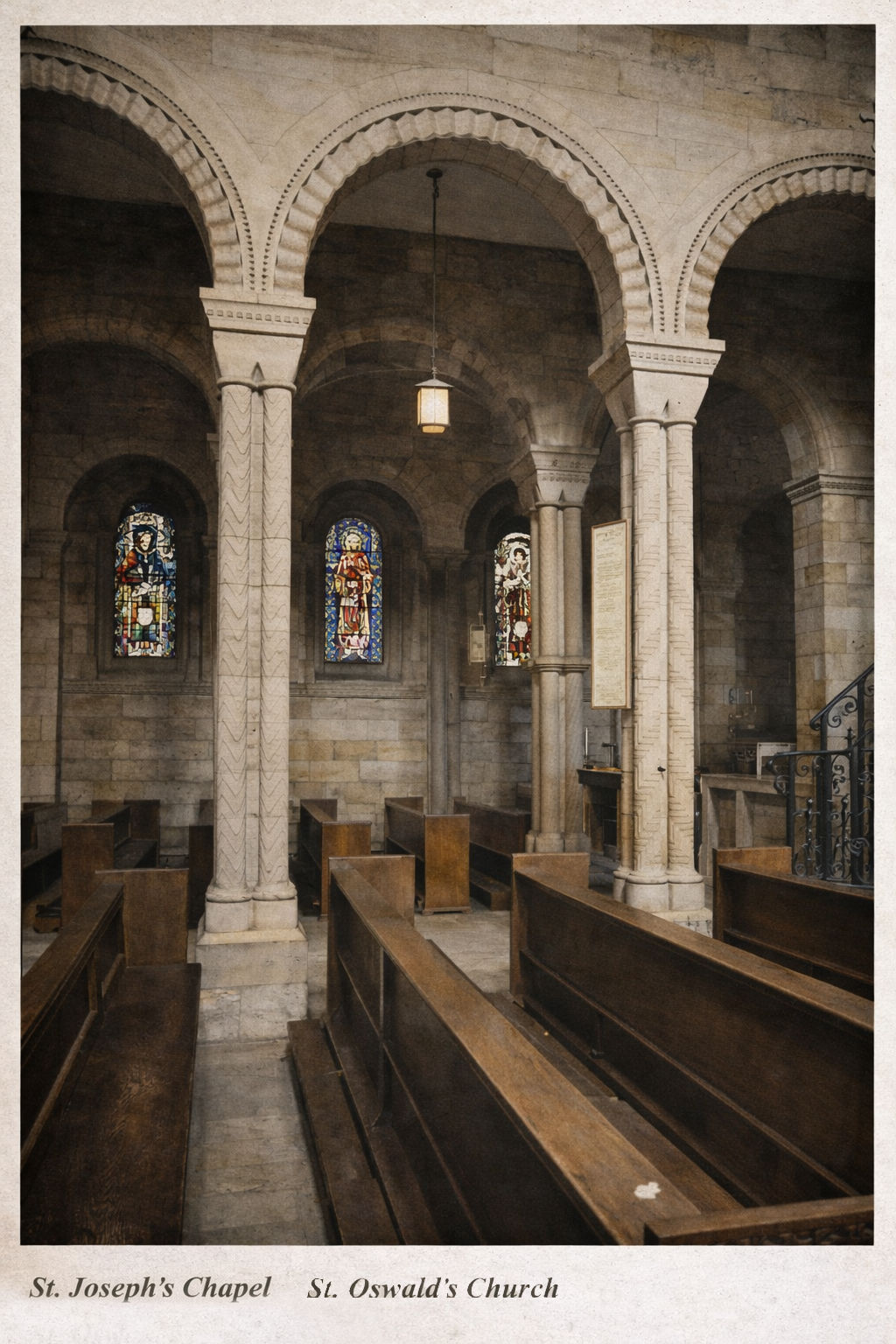
Others who gave evidence included Lord Arundel of Wardour, the Duke of Norfolk, William Bernard, Lord Petre, Mr. David Lewis and Fr. William Waterworth, S.J.
Mr. Charles Weld of Chideock told of a letter he had from his sister who was Mother Prioress of the Convent of the Good Shepherd at Finchley in which she wrote: “One of our lay Sisters who has come here from Preston tells us that there is great devotion there to the English Martyrs and especially Father Arrowsmith. She knew of a Protestant woman who was cured of fits (epileptic or due to illness) by a small piece of cloth which had touched the Holy Hand. Mrs. Clough of the parish of St. Ignatius in Preston had given her the cloth. We have a penitent in Bristol who was cured of cancer of the nose by the hand of Father Arrowsmith. I have also heard about a miracle at which the recently deceased Mr. Markland, father of Mrs. Gillow of Stapleton Torquay, was present. This was the cure of a man who was going to have his hand amputated”.
Mr. Weld also said that he had heard of Fr. Summer’s cure. He continued: “Ever since I was a boy at Stonyhurst I have always heard people speak of the hand of Father Arrowsmith and of the miracles performed by it. I received a report from Mother Selby, Superior of the Bar Convent, York, of the following miracle: Miss Mary Selby of Biddleston had lost the use of her arm over a period of six months; it had become contracted and was wasting away so that there was no flesh left and the skin had dried up. Two surgeons tried without success to cure her. After a novena she went to the sanctuary of the chapel where Father Bell applied to her arm a piece of linen which had touched the hand of the Venerable Father Arrowsmith. At that instant the arm returned to its natural state and became the same as the healthy arm. This miracle happened twenty or thirty years ago in the Convent of St. Mary in York. I have other reports of miracles performed by the hand of Father Arrowsmith which I can produce if necessary”.
Giving evidence later Canon Lawrence Toole also described the cure of Mary Selby and says it happened in 1832, was permanent and the surgeon in charge of the case testified that it was a real miracle. The Canon also quoted from a letter from the Mother Superior at York: “For five or six years Miss Mary Bell was crippled by contusions on the knee. Surgical treatment was of little or no benefit. When she was in this convent, wanting to become a novice, she made a novena full of confidence in honour of the Holy Name of Jesus and of Father Arrowsmith. This was at the beginning of January 1844. On the feast of the Holy Name a cloth which had touched the hand of Father Arrowsmith was applied to her knee by the Mother Superior. At once she felt she was cured and walked firmly and easily. A Catholic surgeon examined the case and decided that the cure was certainly miraculous. It was permanent. I could tell of other miracles obtained by the hand of Father Arrowsmith. One of these was witnessed to in the proper form by three witnesses in the presence of Dr. Goss, Bishop of Liverpool, on December 5th 1866 during a visit he paid to South Hill. I have often heard people say that they received a grace from the Holy Hand”.
Father Richard Summer, S.J. then described to the tribunal at length his own cure from polypus in 1822.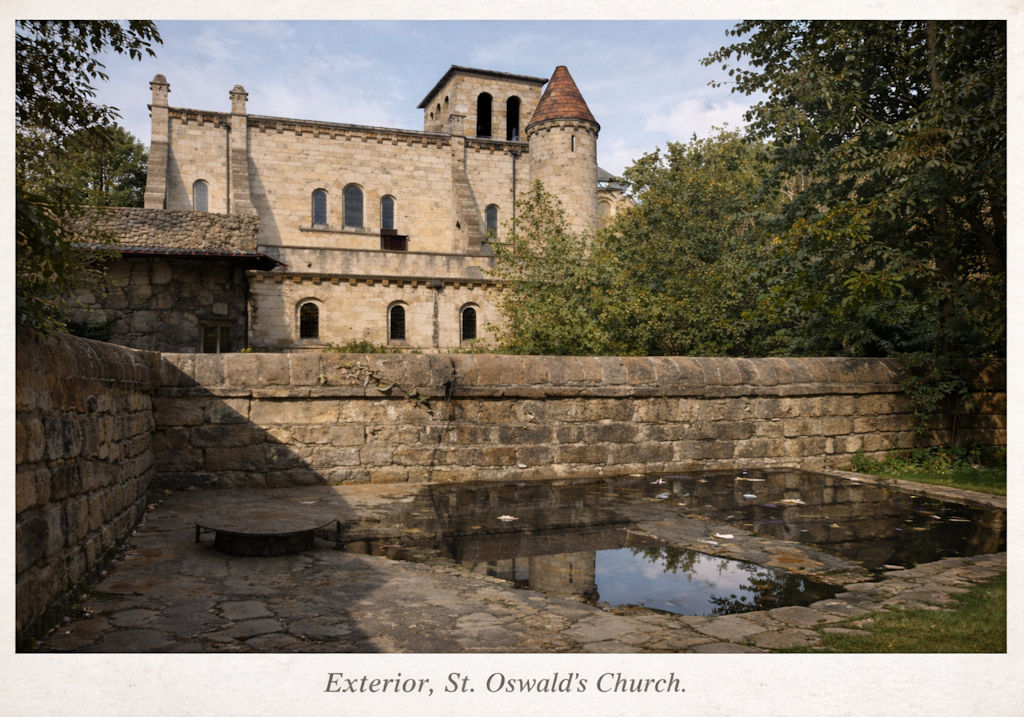
Linen
The present writer was born only about five miles from Ashton and knows how lively devotion to the Holy Hand has been in South Lancashire during the past half-century. On April 21st, 1923, the Wigan Observer and District Advertiser gave evidence of this fact in a long article. It described the Hand and its history and the constant stream of pilgrims. “From several places in Canada and the States linen and requests for the touch of the hand are received”, the article stated. This is still true. Only a couple of weeks ago a request for linen came from a Mrs. Arrowsmith in America.
The article says: “Some of the most interesting cures have been credited to the use of the linen. Father Kirwin told me that three years ago a nun came to the church for linen in order that she might use it for cancer of the stomach. Forty years previously, she said, she was suffering from a punctured lung, which the doctors declared was incurable. She applied some linen that had been touched by the Holy Hand and afterwards never felt the slightest trouble. A local man had strange growths on the palms of his hands which the doctor said would lead to paralysis. That was a long time ago. The man was touched with the Holy Hand and he is still working. Another man came with his tongue in a very bad condition. He said he had an excrescence on it and foolishly cut it off with a pair of scissors. He was touched with the Hand and declares that all pain immediately went and the tongue was healed”.
Dome Bede Camm tells of a little girl who through a severe illness lost entirely the use of her legs. To the doctor’s amazement she was instantly cured by the touch of the linen. That was in 1870. Other cures mentioned include a woman in Bournemouth Infirmary who had cancer. At Seaforth a boy was in danger of losing his sight through a recurrence over two years of malignant ulcers. Specialists were consulted without any good effect. One eye was almost lost and the other was going rapidly. The boy was touched by the Holy Hand and returned home happy and free from the pain, which had been intense. His eyes gradually healed. Dr. Leighton of Brinscall recalled the case of a boy who at four years of age could neither walk nor talk. Touched by the Hand he immediately exclaimed ‘Mother Mary’.
1970
The Hand is venerated in St. Oswald’s church every Sunday afternoon. On June 14th, 1970, a Mr. Charles Coyne from Liverpool told the priest that he was making his tenth annual pilgrimage of thanksgiving. “Ten years ago,” he said, “I had been given only two or three months to live. I had cancer. Dr. Forshaw of Up Holland College brought the Holy Hand to me in bed. I never looked back. I come every year to give thanks”.
The following letters show how very alive devotion to St. Edmund Arrowsmith is now in 1970. The first is dated July 27th 1970 and came from Aigburth: “I am enclosing a piece of linen with the request that you will bless it with the Holy Hand of Blessed Edmund Arrowsmith. As a boy of ten years of age my own father was cured of serious eye trouble by the touch of the Holy Hand. He was taken by my grandmother from Ince-in-Makerfield. They had to walk all the way as there were no buses in those days but they made the journey with faith until he was cured”.
The second arrived when this booklet was nearly finished. It came from Westhoughton and is dated August 19th 1970: “I bring my mentally handicapped daughter on an annual visit and have done for the past eight years. At three years of age she was unable to walk unaided but after her first visit to St. Oswald’s she walked alone the following day! So you see we make the annual visit in thanks and hope”.
On August 28th 1970, the anniversary of St. Edmund’s martyrdom, a lady walking with the aid of a stick came to venerate the Holy Hand. She had been certified a cripple four years ago due to muscular distrophy. On September 1st, his feast day, she telephoned to say she could walk without her stick. For the first time for many years she walked unaided to the altar rail to receive Holy Communion. On September 2nd she returned to Ashton to give thanks. One of the senior priests of Liverpool archdiocese told the writer that years ago his sister was threatened with serious eye trouble concerning which a Consultant made only the gloomiest prognosis. After venerating the Holy Hand she had no further trouble.
On Sunday, August 30th after the public veneration, a man told the priest that some years previously he had applied for admission to the Royal Air Force but had been turned down owing to deafness. He came to be blessed by the Holy Hand, then went back to the recruiting office and was accepted, cured.
These stories are told simply for what they are worth as facts. Those who told them believe that they have received favours through St. Edmund’s intercession. Nobody claims that all these favours are miracles, proved to be beyond natural powers and accepted by the Church as such. Let us thank God for the evidence we have that He continues to grant so many favours through our Martyr’s prayers; but, above all, let us resolve to model our lives on his and so make ourselves worthy of even more favours from God.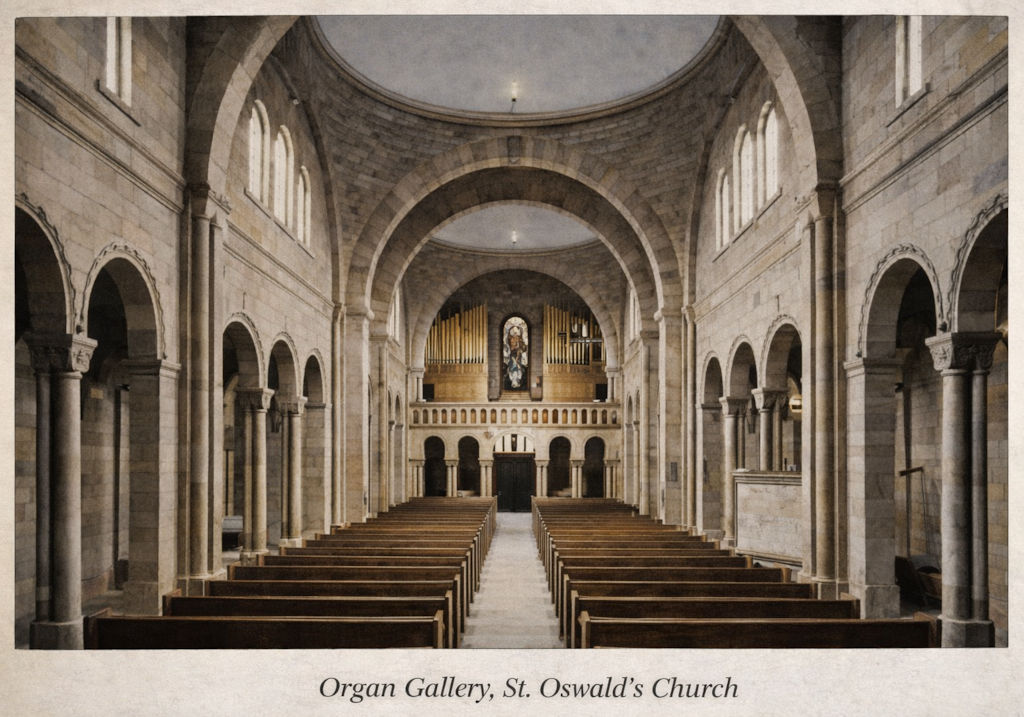
The Church
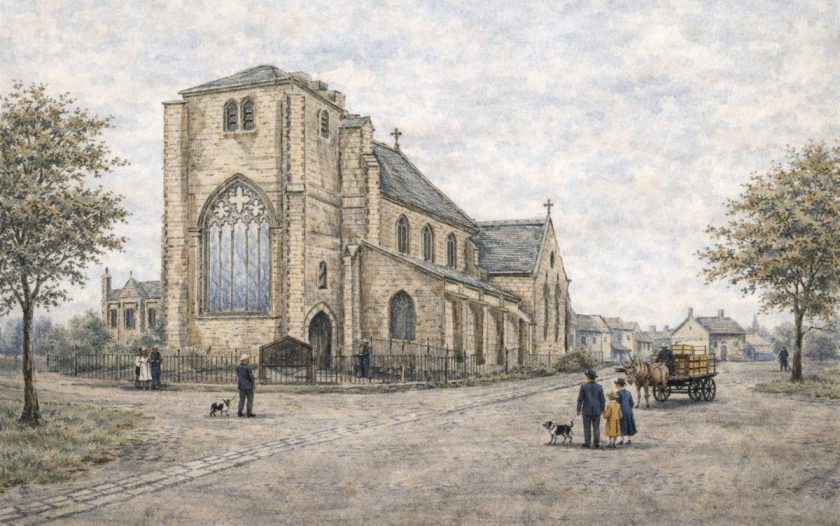
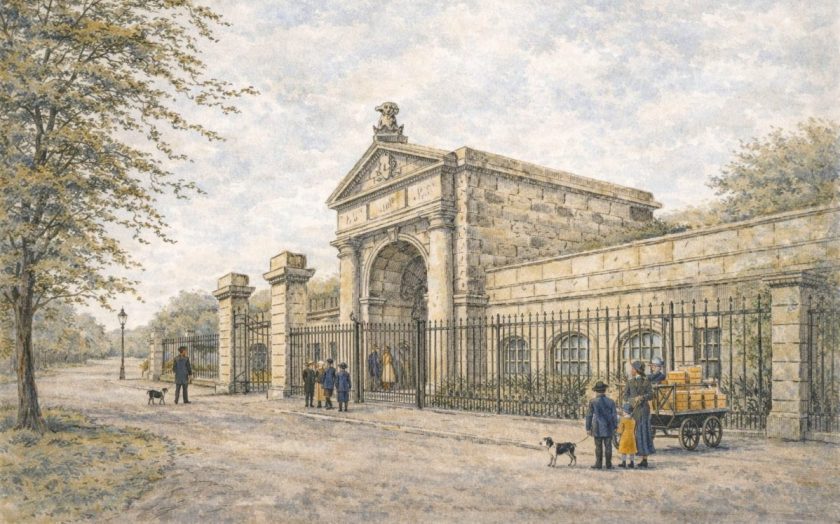
During the long, dark years of persecution Catholics attended Mass when a priest was available at Bryn Hall, the home of the Gerard family. Traces of the Hall still remain – In the garden is a cross which is said to mark the site of the former chapel, in which St. Edmund probably celebrated holy Mass. The celebrated Father John Gerard was the son of Sir Thomas Gerard of Bryn and was born on October 4th, 1564. The family moved from Bryn Hall to Garswood Hall at the beginning of the last century. In 1822 Sir William Gerard built the first church at Ashton under the patronage of St. Oswald of Northumbria, the Christian King who was martyred at Maserfelth (which some scholars believe to be Makerfield) in 642. The first priest was Rev. Thomas Lupton and the first entry of the baptismal register is dated September 30th 1822. Sir William Gerard, his two sons and their chaplain, Father Greythorne, were drowned in Car Mill Dam, the mile-long lake which is now to be seen on the right of the East Lancashire Road as one drives from Ashton towards Liverpool.
The old church with its stately tower was demolished after it had been in use for just over 100 years and replaced by the present building which, by any standards, is a gem of ecclesiastical architecture.
It rises from the green church yard in well wooded grounds which form a little nature reserve within a stone’s throw of main roads, bustling streets and a twice-weekly market. The church is the only one of its kind north of the River Loire. Its style is that of the mediaeval churches of a district in France 100 miles south of the Loire. Domes were never used in mediaeval English church building but around Poitiers many churches are still to be seen in this lovely French Romanesque style.
The nave, which is thirty two feet wide, is roofed with two massive domes, giving a total length of a hundred feet. The beautifully fashioned sanctuary, built in the form of a stilted apse, is roofed with a semi-dome. The Ambulatory or processional aisle runs entirely round the nave and sanctuary and is bounded by exquisitely carved arches and pillars. Look up as you walk round and you will find faces carved in stone gazing down at you. The High Altar and the surrounding pavement are of marble. The five mosaic panels at the front of the altar represent the Evangelists, two on either side of the Lamb sitting on the book of the Seven Seals. The sanctuary rails are of Sienese marble with bronze gates. The altar of St. Joseph is from the old church. The frontal panel of the pulpit carved in stone represents peacocks drinking from the well of eternal life, symbolical of immortality, after the fashion of a carving at Ravenna. The brilliant decoration of the semi-dome over the sanctuary will be seen to embrace the symbolism of the fish, so beloved of the early Christians. We find it in Roman monuments as early as the first decades of the second century. Its popularity among Christians was due to the famous acrostic consisting of the initial letters of five Greek words forming the word for Fish, which words briefly but clearly described the character of Christ and his claim to the worship of believers: Jesus Christ, Son of God, Saviour. The prominent central monogram also proclaims in Greek the Kingship and Victory of Christ.
The stained glass in the church has already become famous for both its sparkling quality and its brilliant design. Around the sanctuary are windows of Saints noted for their devotion to the Blessed Sacrament. Beginning on the pulpit side they are St. John the Evangelist, St. Clare, St. Ita, St. Juliana Falconieri, St. Paschal Baylon, St. Catherine of Siena and St. Tarcisius. The ambulatory windows depict the annunciation, birth, sufferings, resurrection and ascension of Christ. In St. Joseph’s chapel are three spendid windows portraying St. Thomas More, St. Oswald and St. John Fisher. We hope that soon three windows will adorn the Lady Chapel, in addition to the Annunciation which is there already. At the time of writing they are being designed and will represent St. Ambrose Barlow, St. John Southworth (both associated with St. Edmund Arrowsmith) and St. John Rigby, the young layman from Parbold who was condemned for being reconciled to the Church.
In the chapel of St. Teresa of Lisieux is a lovely window of St. Agnes while at the west end of the church are the organ gallery and an impressive window of Christ, King and Priest.
The organ, a German instrument from the old church, was rebuilt by Haupt of Aachen in the 1920s. It has been reconditioned and improved by Pendleburys of Cleveleys in 1970. The leading article in “The Organ” quarterly review, April 1969, stated: “This church contains an organ which is one of the musical treasures of England”.
Arthur Mee in “The Book of Lancashire” in “The King’s England” series wrote: “The Roman Catholic Church (i.e. of Ashton-in-Makerfield) is a splendid surprise for the pilgrim something of which the town must be very proud”. It is charming indoors and out. The two west towers are particularly impressive. The open belfrey with its green pyramid top rising nearly 100ft dominates the countryside and its majesty is enhanced by the small round tower with a quaint conical roof of pointed stones. Walk around the outside and you will see many curious shapes of men and beasts adorning the walls of fine cut stone. As you walk up the tree covered carriageway you are faced with the great recessed arch richly ornamented with zigzags. Surmounted by the statue of St. Oswald it frames a fine doorway over which is a tympanum of the crowning of the Blessed Virgin Mary.
Behind the high altar is a window like a mosaic of jewels portraying St. Edmund Arrowsmith and scenes from his life. It is a perfect gem which effectively moves the pilgrim to pray to him whose hand has been venerated here and hereabouts since 1628. The hand of a martyr, the hand of a priest – when it was a crime to do so that hand poured water of baptism, traced the cross of forgiveness and blessing, imposed the oil of comfort in illness and held its God to be adored, sacrificed and received. It is a hand that was consecrated to make its owner another Christ. On October 25th 1970 the Pope told us infallibly that the man to whom we know it belonged now sees face to face the God for whom he died.
At the final resurrection, the “Holy Hand” will be reunited with the glorified body of St. Edmund Arrowsmith.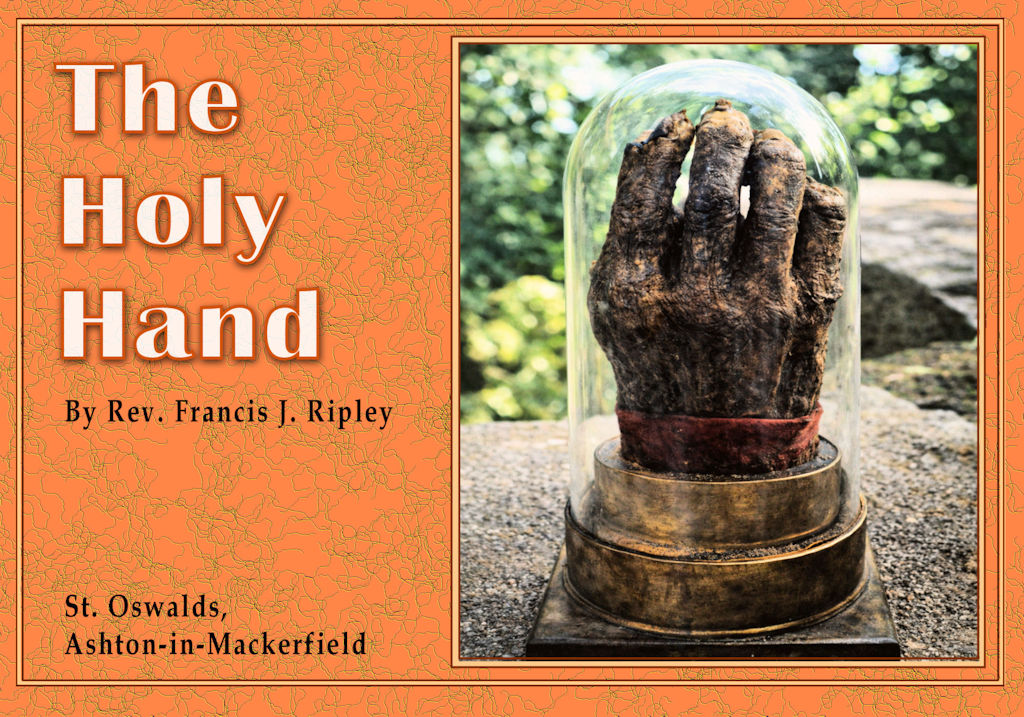
Prayers
The following prayers have been taken from the Common of Martyrs in ‘The Prayer of the Church’.
Let us pray.
Through the merits of your martyr, Edmund Arrowsmith, who freely laid down his life to bear witness to the true faith, give us, Lord, true liberty of spirit.
Through Edmund Arrowsmith who professed the true faith even at the cost of his life, give us faith, Lord, integral and unwavering.
Through Edmund Arrowsmith who followed in your footsteps carrying the cross, give us magnanimity in facing the trials of life.
Through Edmund Arrowsmith, who washed his robes in the blood of the Lamb, help us, Lord, to overcome all bodily and worldly hindrances.
These are they who have come out of great tribulation; they have washed their robes and made them white in the blood of the Lamb.
Therefore are they before the throne of God and serve Him day and night within his temple; and He who sits upon the throne will shelter them with his presence.
They shall hunger no more, neither thirst any more; the sun shall not strike them, nor any scorching heat.
For the Lamb in the midst of the throne shall be their shepherd, and He will guide them to springs of living water; and God will wipe away every tear from their eyes (Rev.7,14-17).
Blessed are those who are persecuted for righteousness’ sake, for theirs is the kingdom of heaven.
Historical Lesson for the Feast of St. Edmund Arrowsmith
The following are the special lesson and prayer drawn up by the Liverpool Archdiocesan Liturgical Commission.
Born in Haydock in 1585 and baptised there as Brian, he took the name Edmund when confirmed on reaching Douay to study for the priesthood. Apart from these years, 1605 to 1612, he spent the whole of his life in Lancashire where his family had always been staunch recusants. His priestly ministry occupied the remaining sixteen years of his life, for the last four of which he was a Jesuit. His work covered mainly what is now the northern half of the Liverpool Archdiocese, being centred in Brindle. His apostolic zeal and its effectiveness are aptly indicated by a remark made at his trial, that unless he were jailed he would make half of Lancashire papist. It was after his second arrest, brought about by a renegade Catholic, that, following an inadequate trial, he died at Lancaster on August 28th, 1628. The ‘holy hand’ of Edmund Arrowsmith is preserved at Ashton-in-Makerfield and is the focal point of devotion to him, notable because of the effective and continuous power of his intercession.
Prayer
Father, you glorify your martyr, Edmund Arrowsmith, through the miracles performed at his intercession. (Pause for private prayer).
Through the priestly intercession of your martyr may your people ever grow in zeal and faithfulness. This we ask through Jesus Christ, your Son our Lord who lives and reigns with you in the unity of the Holy Spirit, God, for ever and ever. Amen.
Photographs of Brindle by Rev. Bernard Eage. Others by the author.
Parish Priests of St. Oswald’s
Rev. Thomas Lupton 1822 – 1824
Rev. Joseph Curr 1824 – 1829
Rev. Walter Maddocks 1829 – 1846
Rev. Joseph Meaney 1846 – 1849
Rev. Henry Newsham 1849 – 1873
Rev. Gerald O’Reilly 1873 – 1896
Very Rev. Canon James O’Meara 1896 – 1946
Rev. J. J. McLaughlin 1946 – 1950
Very Rev. Canon Robert Meagher 1950 – 1970
Rev. Francis J. Ripley 1970 –
This was transcribed from an original 1970 booklet owned by Steven Dowd @2026 Newton-le-Willows.com for use on this Newton website.