History of the Vulcan Foundry, Newton le Willows | ||
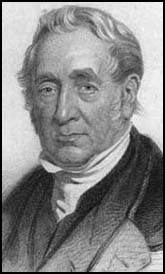
1781 | George Stephenson was born at Wylam-on-Tyne, Northumberland. |
|
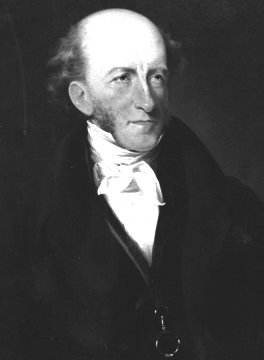
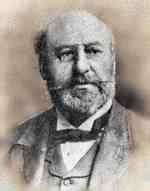
1785 | Charles Tayleur was born. |
|
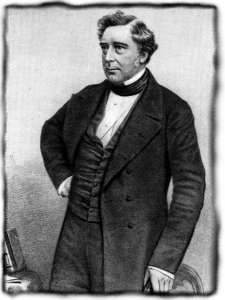
1803 | Robert Stephenson was born at Willington Quay, Northumberland. |
|
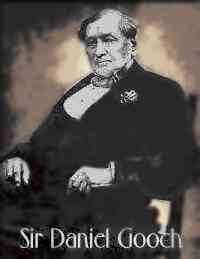
1816 | Daniel Gooch was born in Bedlington, Northumberland, on 24th August, 1816. |
|
1823 | George Stephenson founded a locomotive works at Newcastle-on-Tyne. | |
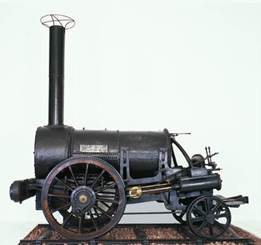
1829 | The Rocket was built by Robert Stephenson & Co. and won the prize of £500 at the Rainhill Trials that were held to determine the most suitable type of locomotive for the new Liverpool and Manchester Railway. |
|
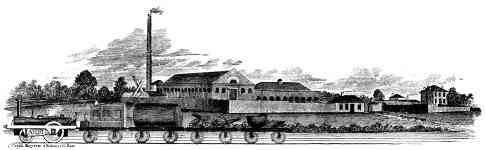
1830 | The Vulcan Foundry was established at Newton-le-Willows by Charles Tayleur, a Liverpool merchant and engineer, for the production of locomotives. | |
| ||
The Liverpool and Manchester Railway opened. | ||
1931 | The Warrington and Newton Railway was opened. | |
1832 | Robert Stephenson joined Charles Tayleur in partnership at the Vulcan Foundry. | |
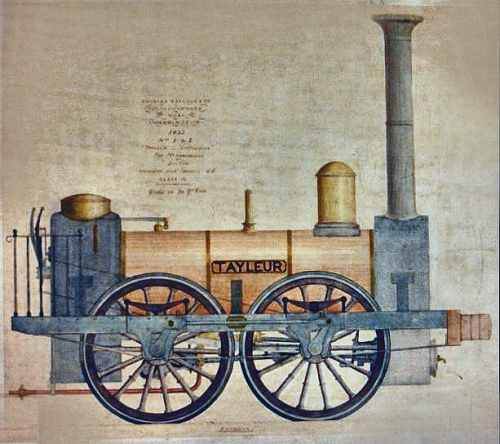
1833 | Mr Hargreaves of Bolton, Lancashire, took delivery of the first two locomotives to be built at the works. They were the Tayleur and Stephenson (four-wheeled engines of the Planet type). |
|
Two bogie engines, named Fire Fly and Red Rover, each with single driving wheels were exported to America for the Camden and Woodbury Railroad. | ||
1834 | Daniel Gooch (later to become Sir Daniel, and an outstanding locomotive designer with Great Western Railway) entered Vulcan Foundry as an engineering apprentice. | |
1835 | In February 1835, on the threshold of the Industrial Revolution, Joseph Ruston was born at Chatteris in Cambridgeshire. He grew up on his father's farm where he developed an interest in its machinery and future potential for improvement. |
|
1837 | One of the first locomotives to run in Russia, a 2-2-2 type, was supplied for the St Petersburg Pavlosk Line. Two 0-4-2 goods engines were delivered to Kaiser Ferdinand Nordbahn of Austria. L'Elephant was supplied for the Belgian Railways. Four single drivers were delivered to Germany for the Berlin and Potsdam Railway. London and Greenwich Railway received its first locomotive from Vulcan Works. Three seven-foot gauge locomotives named Vulcan, Aelas and Bachus were delivered to the Great Western Railway. | |
1846 | The earliest side tank engines for any railway were built and delivered to Ireland for the Waterford and Kilkenny Railway. | |
1847 | Vulcan Foundry took over its subsidiary firm the Bank Quay Foundry of Warrington. | |
1851 | Hornsbys portable steam engine took first prize at the Great Exhibition held at Crystal Palace. | |
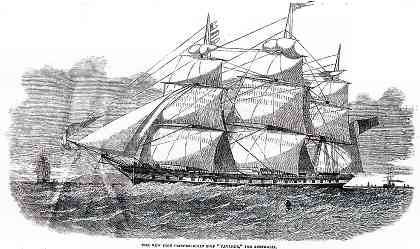
1852 | The first iron sea-going vessel Tayleur, a tea clipper, was built at the Bank Quay Foundry. Regrettably, the ship was wrecked in heavy storms in the Irish Sea on her maiden voyage to Australia and of the 652 people on board, 380 lost their lives. | |
| ||
Vulcan Foundry exported eight 2-4-0 passenger locomotives to India for the Great Indian Peninsular railway. These engines operated the first public railway in India from Bombay to Thana. Between 1852 and 1952 Vulcan supplied nearly 2750 locomotives for service in India, an average of more than one a fortnight for 100 years. | ||
1857 | Joseph Ruston went into partnership with Burton & Proctor, a Lincoln firm of millwrights and smiths, to form a new company entitled Ruston, Burton & Proctor. | |
1860 | Despite the tragic wrecking of the Iron Clipper Tayleur, the Bank Quay Foundry continued to build more tea clippers. In addition to its shipbuilding work, the foundry also fabricated much of the ironwork that was used in the construction of the Conway Bridge and the Britannia Tubular Bridge over the Menai Straights, between Anglesea and North Wales. The Bank Quay Foundry was not to prove a successful investment, however, and closed in about 1860. | |
1862 | Single driver express passenger locomotives were supplied to the South Eastern Railway. The 87.5-mile run took only one hour fifty-five minutes. | |
1864 | A limited liability company was formed with Mr. W F Gooch as General Manager. | |
1866 | Ten broad gauge saddle tank engines were built for the Bristol and Exeter Railway. Their tank capacity was 530 gallons plus an additional 740-gallon tank located below the footplate. | |
1871 | Vulcan Foundry supplied Japan with their first locomotive, a side tank type with 4ft 3in coupled wheels. | |
1872/3 | Farlie Patent double locomotives were built and supplied to New Zealand, North America, Mexico, Portugal, Peru, and Queensland. | |
1884 | Vulcan produced its one-thousandth locomotive in 1884; this was a 2-6-0 tender engine of 3'-6" (1.1m) gauge produced for the New Zealand Government. | |
1887 | Ruston Steam Navies helped to build the Manchester Ship Canal. | |
1888 | The first ten-wheeled tank engines with inside cylinders were built at the Vulcan for the Taff Valley Railway. | |
1890 | Five passenger tank engines were supplied to Rhymney Railway. These were the only engines in the country with saddle tanks combining the features of the 2-4-2 wheel arrangement with double frames to all wheels except the trailing pair. By the end of 1890 the workforce had grown to 555 men. | |
1894 | Ruston, Burton & Proctor produced their first commercial oil engine. | |
1894/6 | Twenty-four 2-6-0 tender engines were supplied to the Indian Midland Railway. Extended taper form smoke boxes gave them a novel appearance. | |
1904 | The Vulcan design for a 4-cylinder Atlantic type balanced compound engine was accepted by the Great Northern Railway. Features included the Vulcan patent starting valve and reversing gear. | |
1914 | The three-thousandth locomotive was completed - a broad gauge 2-6-2 type for Great Indian Peninsular Railway. | |
1914/8 | Vulcan war production included shells, gun mountings, and Paravanes (mine sweeping devices). Ruston Burton & Proctor built almost 3000 single-seat light aircraft at Lincoln. Between 1916-18 Rustons built about 500 Caterpillar tractors for hauling guns. | |
1918 | Ruston acquired the firm of Richard Hornsby & Sons. | |
1922/3 | Twenty 4-8-0 type locomotives were built for the meter gauge Uganda Railway in the Kenya Colony. Fifteen were designed for oil burning, and the remainder for coal. | |
1929 | The first non-steam locomotive was built at Vulcan - an electric locomotive for India. | |
1930 | Front page news when Vulcan, pioneers in transporting locomotives by road, despatched their first engine from the works by road in January. | |
1932 | Design work commenced on the first diesel locomotive to be built at Vulcan Foundry. | |
1933 | Vulcan Foundry entered into an agreement with A/S Frichs of Aarhus, Denmark for the building of diesel locomotives. The English Electric Company Limited supplied the first 6K engines to be used in rail traction. These were for diesel-electric shunt locomotives. | |
1934/5 | One hundred class 5 engines were delivered to London Midland and Scottish - an indication of the tendency to develop a first-class mixed traffic loco capable of hauling any train. | |
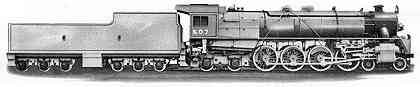
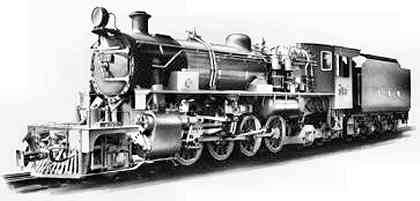
1935 | The largest locomotive (in overall dimensions) built to date at Vulcan. Twenty-four 4-8-4 locomotives were built for the Chinese National Railways. The overall length of the engine and tender was 93ft 2.5ins. |
|
Two hundred and fifty light tanks were built to War Office specifications (subsequently to see service in the Second World War in Flanders and North Africa). | ||
1936 | Vulcan were invited to design and develop an entirely new tank. | |
1937 | The locomotive business of Hawthorn Leslie merged with Robert Stephenson and Company, under the name of Robert Stephenson and Hawthorns Limited. | |
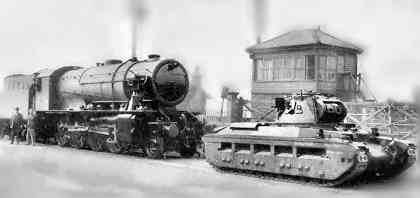
1938 | Pilot models of the Waltzing Matilda tank were ready for trials. |
|
1940 | Matildas in action on the Western Front (and later in North Africa, Russia, and the Pacific). The Company's agreement with A/S Frichs ended (due to the hostilities). A new agreement was signed with the Dury Car Company Limited, for the manufacture of diesel mechanical locomotives. Ruston & Hornsby Limited took over Davey Paxman & Co (Colchester) Limited. | |
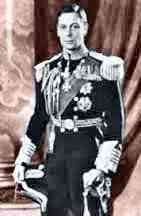
1941 | King George VI and Queen Elizabeth visited Vulcan Foundry. |
|
1943/5 | Over five hundred 2-8-0 Austerity type steam locomotives were built for use by the War Department. | |
1944 | Vulcan Foundry acquired Robert Stephenson and Hawthorns Limited. In 1944 the workforce reached its peak of 4,128 employees. | |
1945 | Total contributions by Vulcan to the war effort in terms of military equipment: 250 Mk V and Mk I light tanks, 600 Matilda tanks, 1700 machine gun mounts, 10,000 major torpedo parts, 40,000 smaller torpedo details. | |
1946 | Vulcan commenced building mechanical parts for electric and diesel-electric locomotives working in conjunction with the English Electric Company Limited. One hundred and twenty 2-8-0 Liberation locomotives were built for the war-ravaged countries, Belgium, Czechoslovakia, Yugoslavia, Poland, and Luxembourg. | |
1949 | Diesel-electric and electric locomotives produced in co-operation with the English Electric Company Limited in addition to the steam locomotives being built at the time. The first mainline diesel-electric locomotive to operate in Egypt was built at Vulcan Foundry and was fitted with an English Electric 16SVT engine. | |
| ||
1954 | The last order for steam locomotives received, three 2-6-2 wood-burning locomotives for the North Borneo Railways. | |
1955 | Vulcan Foundry together with its associate company, Robert Stephenson & Hawthorn Limited of Newcastle-upon-Tyne, became full members of the English Electric Group of Companies. English Electric diesel engines were built at Vulcan Foundry for the first time. | |
1956 | The 6,204th steam locomotive was built at Vulcan Foundry, a 4-8-4 (class 31) locomotive for East African Railways - the last big mainline steam order for Vulcan, forty-six were built. |
|
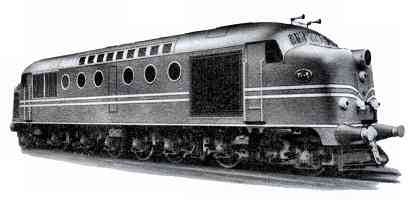
1957 | An order for 22 Deltic locomotives was placed by British Rail, each being powered with two 18-cylinder Napier Deltic engines. The first diesel-electric locomotive for the railway modernization scheme was handed over to British Rail. | |
1962 | Vulcan Foundry became the Vulcan Works of English Electric Company Limited. The variety of work was increased to include diesel engines for traction, marine, and industrial applications. | |
1964 | By May of this year 1173 diesel and electric locomotives had been despatched from the works. | |
1965 | A Vulcan built 12-cylinder CSVT engine became the two-thousandth English Electric diesel engine to be delivered to British Rail. This was installed in a Vulcan built standard type 3 diesel-electric locomotive. | |
1966 | Ruston & Hornsby Limited and the English Electric Company Limited merged and formed English Electric Diesels Limited. | |
1968 | The English Electric Company Limited became part of the GEC Group of Companies. | |
1970 | Continuous locomotive production at Vulcan Foundry came to an end with the last mainline locomotive to be supplied to Ghana Railways and Ports. Ruston Paxman Diesel Limited was formed as a management company of English Electric Diesels Limited with headquarters at Vulcan Works. | |
1972 | English Electric Diesels Limited changed its title to GEC Diesels Limited. | |
1975 | Ruston Diesels Limited became a separate company within GEC Diesels Limited. | |
1984 | Ruston's success was rewarded with the presentation of the Queens Award for Export Achievements. | |
1989 | The engineering companies of GEC and Alcatel Alsthom formed GEC ALSTHOM. | |
1990 | Four Ruston 16RK270 engines were the power behind Hoverspeed Great Britain winning the Hales Trophy (Blue Riband). The vessel was the first large passenger/car high-speed wave piercing fast ferry. |
|
1998 | Three major contracts for the supply of diesel engines for rail traction saw the revival of Ruston's involvement with railways. Ruston's success was rewarded with the presentation of the Queens Award for Export Achievements. GEC ALSTHOM floated on the Stock Exchanges as ALSTOM, Ruston and its sister companies became part of ALSTOM Engines Ltd. Catlink V, a larger version of Hoverspeed Great Britain and powered by 4 Ruston 20RK270 engines awarded the Hales Trophy. | |
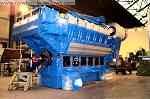
2000 | ALSTOM Engines Limited was acquired by MAN B&W Diesel AG and Ruston and its sister Companies became part of MAN B&W Diesel Ltd. Ruston introduces its new RK280 range of engines. | |
| ||
2001 | On the 17th May 2001, the announcement was made to the employees at the Vulcan Works that, by the end of the year 2002, the site would be closed and the business transferred to the MAN B&W Diesel Ltd, Mirrlees Blackstone site at Stockport in Cheshire, England. | |
The History of Vulcan Works from 1830 to 2002, Prepared by Malcolm Siberry | ||
Copyright 2000, MAN B & W Diesel Ltd. | ||
Used with Permission |