1985: Excavation and Survey at Newton Mill, Newton-le-Willows.

Newton Mill

INTRODUCTION In April 1985, the then Archaeological Survey of Merseyside was advised by St Helens Metropolitan Borough Council of a planning proposal to re-route a sewer pipe in Newton-le-Willows. The work was to involve the construction of a manhole within the ruins of the water-mill (NGR SJ 5927 9528) which stands on the west bank of Newton Brook, southeast of Newton-le-Willows church and west of Mill Lane (Figure 12). The existing mill remains appeared to date from the 18th century, but documentary evidence suggested that there had been a mill…

Read More >>

1880: A walk around the Newton-le-Willows Neighbourhood.

Warrington Examiner

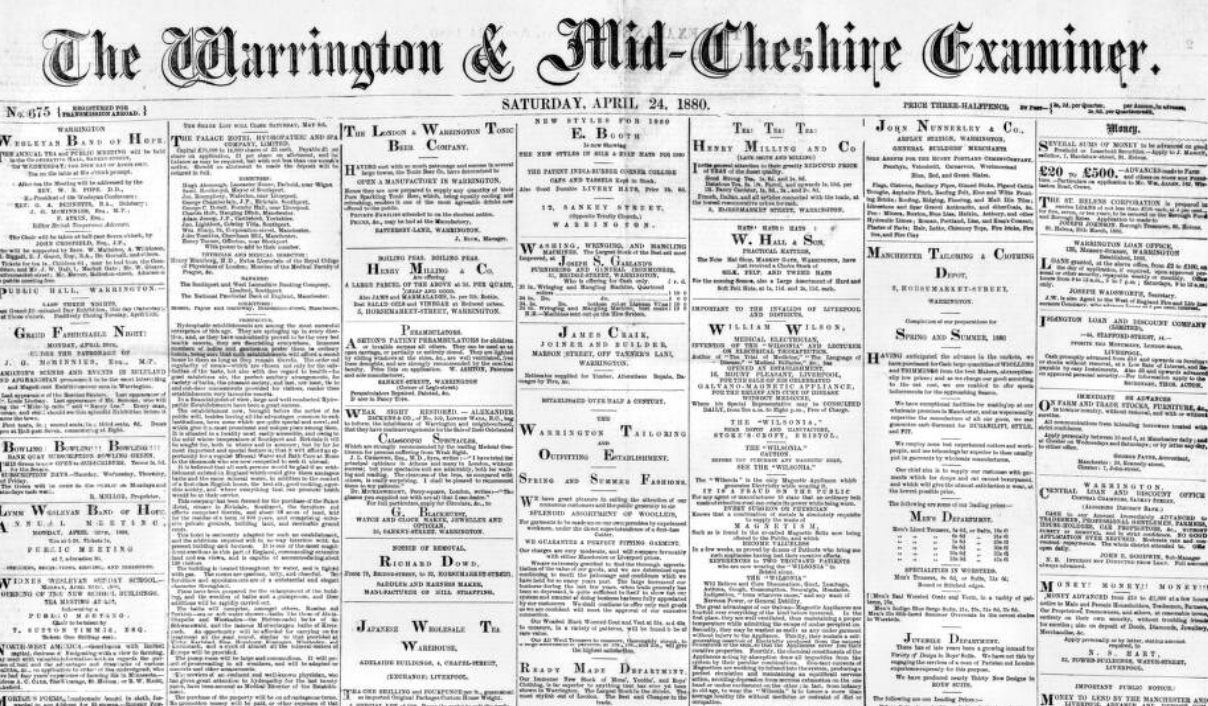
Letters to the Editor…Warrington Examiner – Saturday 24 April 1880 Sir, As “the mild season, that time when rain from above falling makes all things green, and springing flowers awake from sleep and hail the wished-for day,” invited to take a walk, and the time being convenient, I strolled into Burtonwood, or, as perhaps it ought to be called, Bowyer-town-wood, passing the ruins of the mill erected by T.P.L., 1793, and under the viaduct, a picturesque object, as seen from Newton Common, and on to Bradley Hall (similar in name…

Read More >>

Coloured views on the Liverpool and Manchester railway

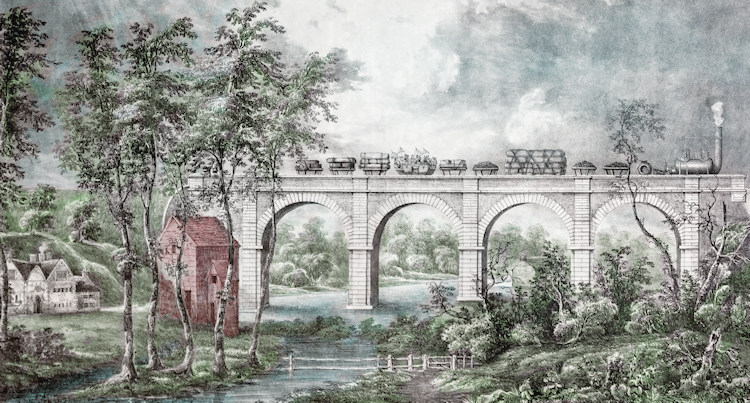
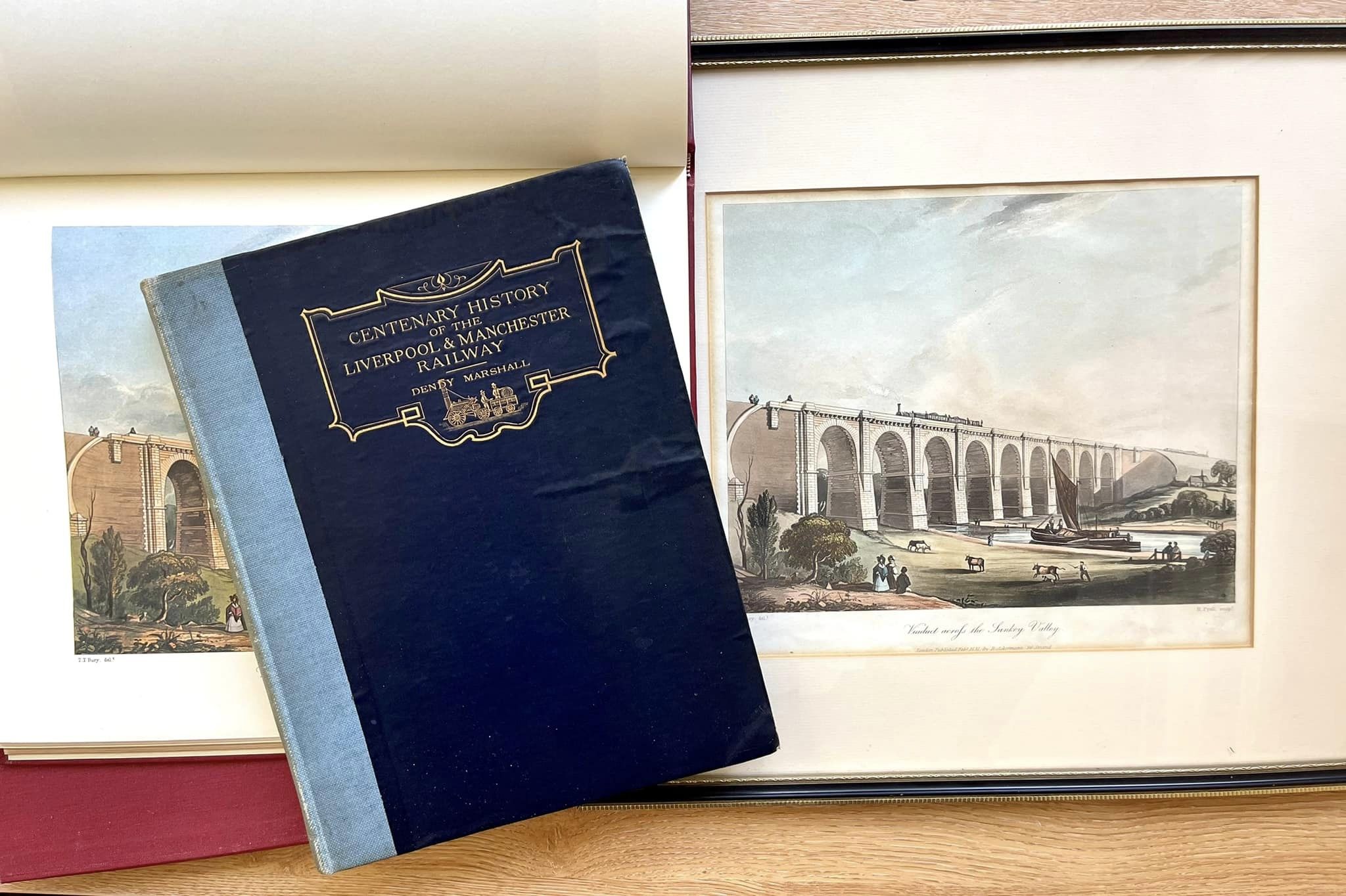
So most people know how mad I am about local history, and over the years I have had various copies of the different reproduction historical books of the 1831 TT Bury “Coloured views on the Liverpool and Manchester railway” but have never been able to buy or afford an original book, which sell with 6 to 12 prints at anything from 6000 to 12000 pounds. But, I think that I’ve managed to buy an original 1831 Ackerman of Plate 4, showing the “Viaduct across the Sankey Valley” which is brilliant…

Read More >>

THE BARONY OF NEWTON IN MAKERFIELD

THE BARONY OF NEWTON IN MAKERFIELD

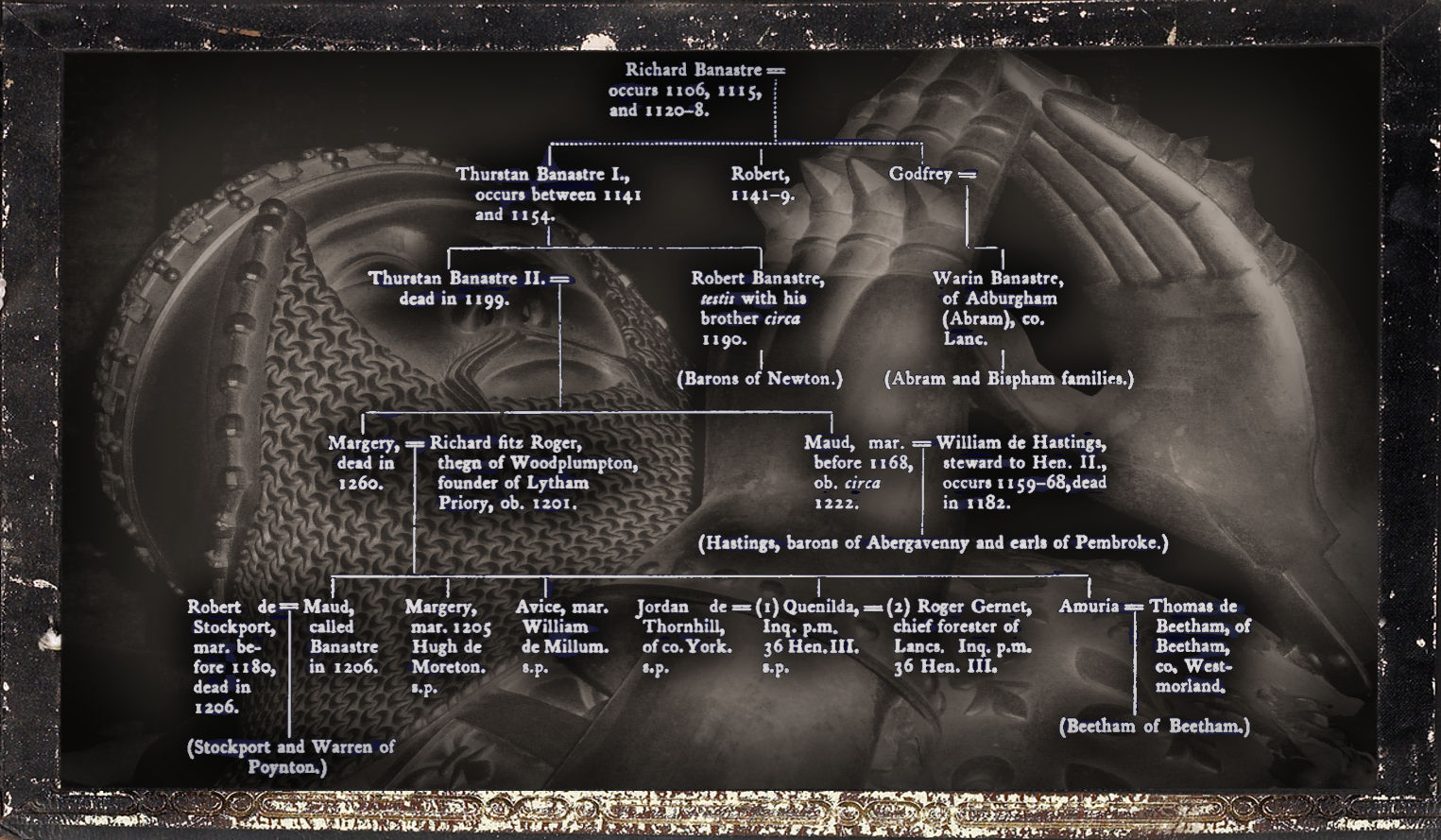
Historical Overview This liberty is almost conterminous with the Domesday hundred of Newton. During the twelfth century, it was included in the ‘corpus comitatus,’ or sheriff’s charge, at the assized rent of £8 16s. 4d., increased to £11 11s. 4d. in the year 1201. When Robert Banastre received it from Henry II, these lands appear to have been subject to the yearly payment of the former sum. When delivered to his son by the crown in 1204, the tenure was partly by knight’s service and partly in socage. The Banastre…

Read More >>

A Timeline of Newton History

A Timeline of Newton History

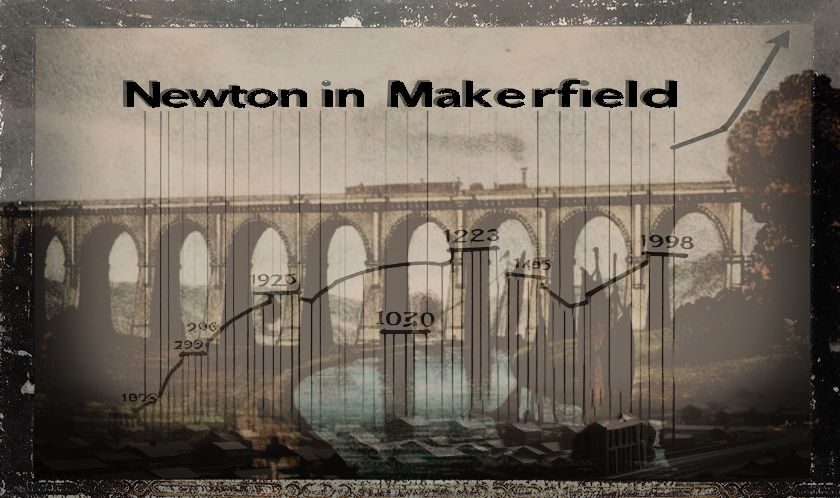
Timeline of Newton in Makerfield and Newton-le-Willows This timeline offers a comprehensive overview of the significant historical events that have shaped the regions of Newton in Makerfield and Newton-le-Willows. Spanning from the 12th century to the modern day, the timeline highlights key developments, including landmark charters, pivotal societal changes, and major infrastructural projects that have influenced the growth and evolution of these areas. By documenting these events, the timeline not only chronicles the rich history of Newton in Makerfield and Newton-le-Willows but also reflects the broader historical trends in governance,…

Read More >>

The Dangers of Level Crossings

St. Helens Examiner - Saturday 23 December 1882

Saturday 23 December 1882 The enthusiasm which the new Ship Canal has evoked in commercial circles, having extended to Newton, naturally caused the mind to turn for a time to the “Sankey Canal” by way of antithesis. Not that this was the first canal made in England by any means, for the Romans, during their residence in England, cut a canal from the vicinity of their metropolis, the city of York, as appears from Drake’s Eboracum. In the year 1121, Henry I made a navigable canal of seven miles in…

Read More >>

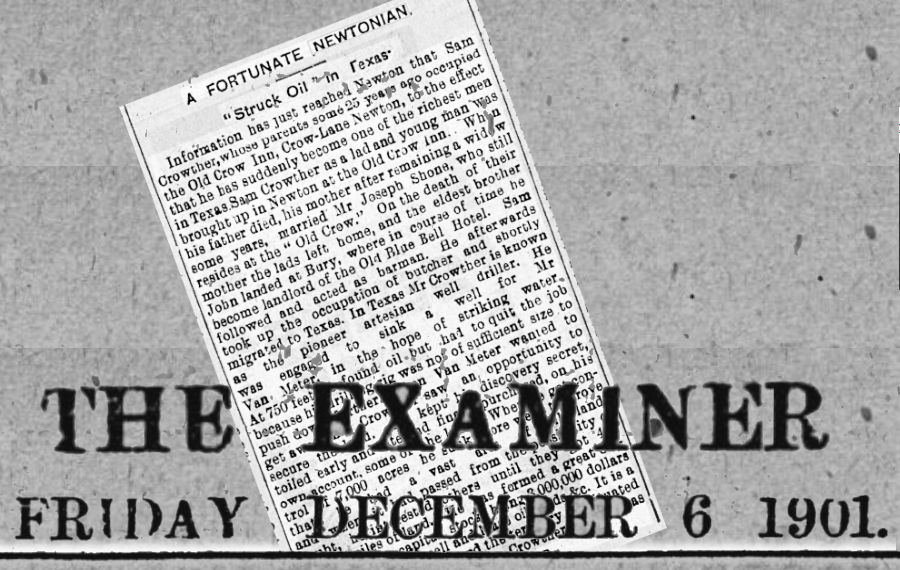
1901: A Fortunate Newtonian: “Struck Oil” in Texas

St Helens Examiner 1901

St. Helens Examiner – Friday 06 December 1901 Information has just reached Newton that Sam Crowther, whose parents once managed the Old Crow Inn on Crow Lane in Newton about 25 years ago, has suddenly become one of the richest men in Texas. Raised in Newton at the Old Crow Inn, Sam Crowther experienced his formative years and early adulthood there. After his father passed away, his mother remained a widow for several years before remarrying Mr. Joseph Shona, who still resides at the Old Crow. Following their mother’s death,…

Read More >>

THE FEE OF MAKERFIELD. Part II.

By William Beaumont, Est/.(published and read 20th March, 1878.) On a former occasion, when I had the honour of reading before this Society u paper on the above title, I intimated that l might on some other occasion, if I had time and you had patience, be led to continue the subject. In mv former paper I traced the Barons of Newton through the successive lines of the Bannstres and Langton’s, and ended it when, the latter family becoming extinct by the death of the last Sir Thomas Langton, Newton…

Read More >>

Toll Road Improvements

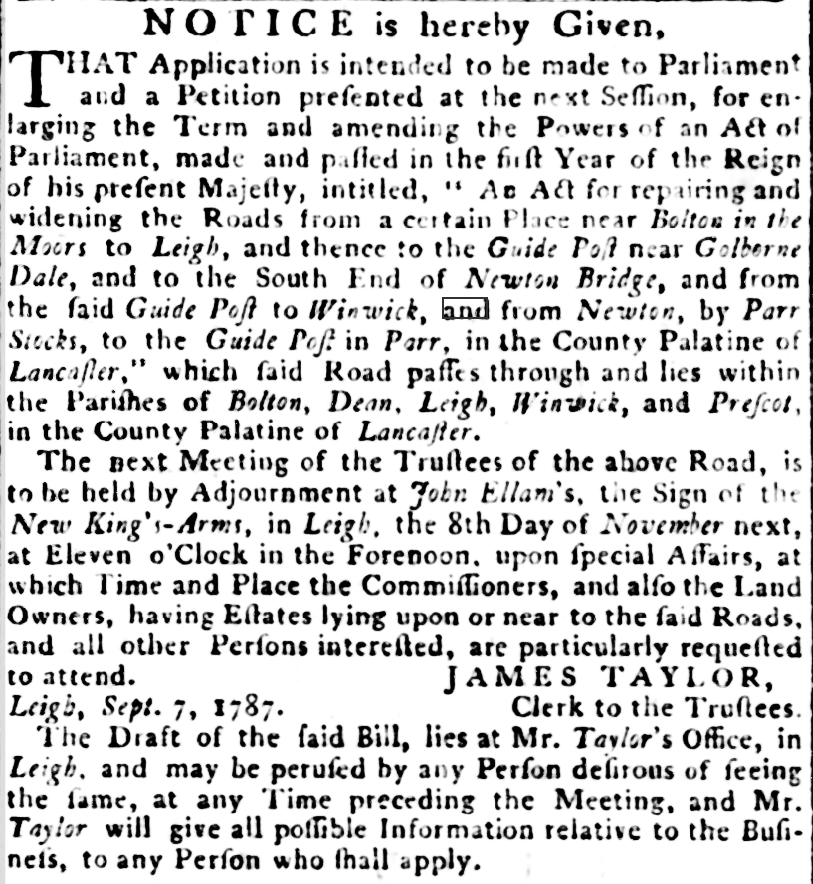
Toll Road Improvements, Newton le Willows 1787

Notice is hereby Given, this Tuesday 30 October 1787, That application is intended to be made to Parliament and a Petition presented at the next Session, for enlarging the Term and amending the Powers of an Act of Parliament, made and passed in the first Year of the Reign of his present Majesty, intitled, “An Act for repairing and widening the Roads from a certain Place near Bolton in the Moors to Leigh, and thence to the Guide Post near Golborne Dale, and to the South End of Newton Bridge,…

Read More >>

Newton-le-Willows 1821-1851

The impact of the Liverpool and Manchester Railway on: Newton-le-Willows 1821-1851 Newton le Willows is situated on the lowlands of south Lancashire, on the route to the north by way of Warrington, Wigan and Preston. From Saxon times until 1830 the village of Newton was in the east of the township, situated on an inlier of bunter sandstone overlooking a crossing place on the River Deane; this sandstone area provided a dry site and a water supply from shallow wells. The remainder of the township is a broad spread of…

Read More >>

CASTLE HILL, Newton-le-Willows

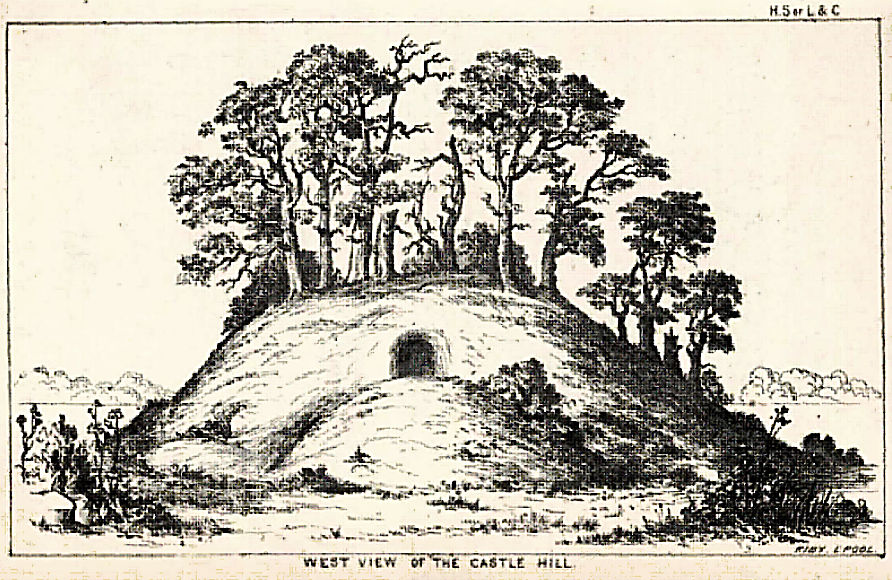
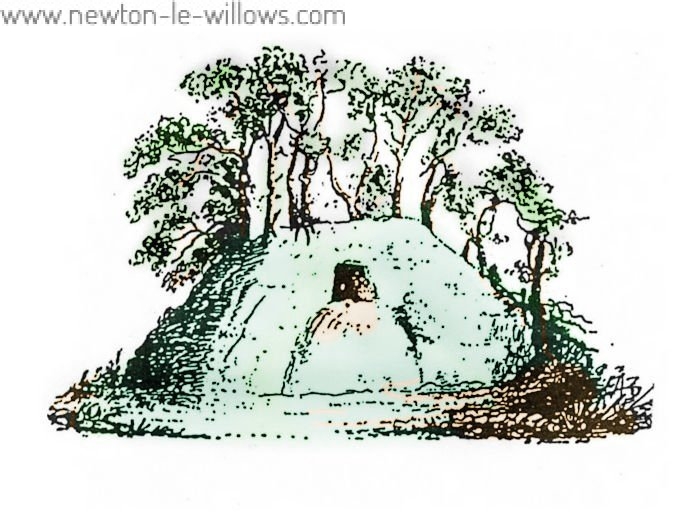
1980’s Archaeological Excavations. he text for this post is transcribed from two pamphlets that where produced at the time of the 1980s digs at Castle Hill, to aid public understanding of the work that was being carried out by the archaeologists from Liverpool. Pamphlet #1 Having received permission from the Department of the Environment to excavate a scheduled ancient monument, a North West Archaeological Trust Community Programme is now in the process of investigating an earthwork at Castle Hill, Newton-le-Willows. Although this mound is a recognisable landmark and still stands…

Read More >>

The Vulcan Works – Making the Lion roar again

During the early part of 1979, Ruston Diesels Limited, the Company then occupying the historic Vulcan Foundry site, agreed to restore the locomotive Lion which had been a static exhibit for many years in the Transport Gallery of Liverpool Museum. This was to provide project work for apprentices and graduate trainees, and to enable Lion to participate in the forth-coming ‘Rocket 150’ celebrations. On 4 April, the engine arrived at Ruston’s looking rather incongruous on the back of an articulated lorry and during the next few weeks it was stripped…

Read More >>

Southworth Burial Mound

I recently purchased a number of the Burtonwood Brewery in-house ‘Top Hat’ magazines from the 1980s, in one of them was this article concerning the excavation of the Southworth Burial Mound which is between Winwick and Lowton. Digging into the roots of history Remnants of a long-lost civilisation have been unearthed from plough-blade depth on open farmland, close to a huge man-made crater which will eventually accommodate colliery waste. And to mark the sensational discovery, being hailed as the North’s most important prehistoric find of the last decade, the archaeology…

Read More >>

Steam-Boiler Explosion at Newton

There was a Great Loss of Life by a Steam-Boiler Explosion at Newton.. 22nd Sept 1838 We regret to inform that the Viaduct Foundry on the Manchester & Liverpool Line of Railway at Newton in the Willows, the property of Messrs, Jones, Turner, and Evens, was on MOnday morning last the scene of a dreadful and fatal steam-boiler explosion, by which eight persons are already dead, and two others are lying without much hope of recovery. It appears that Messrs Jones & Co. employ about 200 men, and in the…

Read More >>

The Public Library – Crow Lane, Newton

The first library in Newton-in-Makerfield was, we believe, the one in connection with the Mechanics Institute held at the Printing Works. It contained some 400 volumes, which had a fair number of readers. Adult members paid 2s. 6d per quarter, 1s 6d. to the library, and 1s to the newsroom; junior members paid 1s. 3d. per quarter, 9d to the library and 6d to the newsroom. In the first quarter (April, May, June, 1853) there were 41 members. In 1868 the now extensive library in connection with the Viaduct Institute,…

Read More >>